
2020
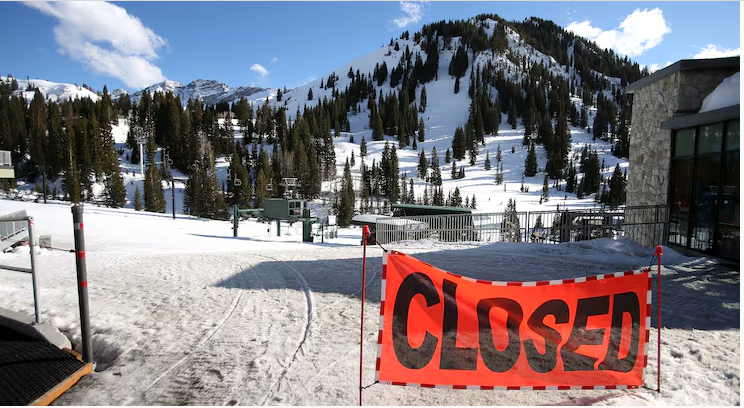
Fortunately, Clayton had stellar support, virtual visits from all of his family and was able to stay healthy during the COVID pandemic. Here is what many of his friends had to contend with:
The hidden cost of keeping older adults safe from COVID-19
Loneliness has serious health ramifications for older adults, but so does COVID-19
 SALT LAKE CITY — Nancy Nelson is pretty sure her dad gave in to loneliness and stopped fighting. Richard Mueller, 93, had been without visits from family members for nearly a month when he died April 10, as care facilities barred visitors in response to the pandemic.
She had formed the habit of calling and asking someone on the facility’s staff to hand her dad his cellphone, usually stowed out of reach on a nightstand.
“We would talk, probably every other day,” said Nelson, who described her father as increasingly sad with the isolation imposed to protect him and other older adults from the novel coronavirus. Advanced age poses serious risk of severe illness and even death from COVID-19.
“I am giving up,” he told her. “I don’t know if I will ever see you again.”
He was crying, she said.
The world has a great deal still to learn about COVID-19, the respiratory infection that’s forced millions to self-isolate. But it was clear very early tha t the illness caused by the SARS-CoV-2 virus takes an especially steep toll on those 60 and older, compared to the average younger person without a complicating factor like diabetes or heart disease. COVID-19 has been referred to cruelly as a “boomer remover.”
So older adults have been sternly warned to isolate. In most families, adult children are staying physically distant from their parents and making sure youngsters — seldom seriously harmed by the disease but probably able to spread it — don’t get too close. Facilities, from clinics and hospitals to senior residential living communities and nursing homes, have banned visitors outright.
That means the research on keeping older people safe from this coronavirus butts heads with decades of knowledge about loneliness.
Isolation creates many health issues, increasing both anxiety and depression, Dr. Gail Saltz, associate professor of psychiatry at New York-Presbyterian Hospital’s Weill Cornell School of Medicine, told the Deseret News. “Loneliness definitely affects immunity, it affects the cardiovascular system. One can become physically ill from ongoing, intense feelings of loneliness. So it’s important to reach out to older people and connect with them and help them to stay connected to others,” Saltz warned.
Many older adults already live alone, having survived the death of a spouse and perhaps many friends, too. Mueller’s wife of more than half a century had died nearly a decade before.
He’d spent half the time since in assisted living, making new friends and forming a different kind of community that included visits with his children and grandchildren. But a kidney infection disrupted his life and he was hospitalized first, then sent to rehabilitation twice. Christmas was discouraging. It wasn’t long after that when visits were cut off due to COVID-19, so he felt it keenly.
So did his daughter. The little girl who used to sit by his side and put carbon paper between the sheets of the forms he used in his accounting practice had grown into a woman who took him to his doctor appointments and clipped his nails and loved to hug and kiss and joke with him. When the pandemic locked him away, she begged the care center to let her bring a ladder and climb the four or five feet to his balcony so she could stand outside the glass door and just look at him.
“You could wheel his bed over by the glass,” she wheedled. “They’d tell me they‘d check” with someone in facility administration, but it didn’t happen. And it was hard to wrangle the technology for FaceTime visits, since staff was busy and her dad was increasingly frail.
“He was tired of trying and what’s the point,” Nelson said sadly.
Then he was gone.
Lonely
Not everyone who is isolated feels lonely, said Linda S. Edelman, associate professor at the University of Utah College of Nursing. It is also true that people can be surrounded by others and feel intense loneliness.
But few doubt COVID-19 has increased both isolation and loneliness for older adults, including those who like Mueller found new friends in assisted living or other congregate settings. Nationwide, face-to-face interaction in such settings is limited to staff who might bring meals or check vital signs, but might not stay long because of increased workloads and a realistic fear of passing on undiagnosed illness.
Nor is COVID-induced loneliness solely an institutional issue. Older adults living on their own in the community have no staff, just sometimes-harried adult kids and grandkids who are trying to be present while maintaining a physical distance to protect their loneliest family members from a potential killer.
Content courtesy of Deseret News
Overview of the COVID-19 Pandemic
by the Deseret News
The world likely wasn’t paying that much attention on March 11, 2020, when the World Health Organization declared already-worrisome COVID-19 a global pandemic. But that coronavirus, SARS-CoV-2, would soon change world economies, business practices and how health care systems and even schools operated. New and repurposed phrases in the U.S. would soon become part of everyday language in coming months: “masking,” “social distancing,” “flatten the curve,” “quarantine” and “remote work.”
COVID-19 would forever change individual families, too, as the death toll climbed into the millions worldwide.
The fourth anniversary of that pandemic declaration this week is a reminder of how it reshaped the world in profound ways. We better understand preparedness and resilience. We witnessed the vital role of science and research. We found more appreciation for public health and health care workers. We figured out that mental health matters. We saw the value of technology for remote work, education and social connection.
We learned a lot about disease spread and building vaccines fast, about lost jobs and opportunities. We also gained insight into social isolation, the nuclear family and how to put one foot in front of another on a very unfamiliar path. It’s a time to look back, review what happened, and then look forward and commit to keep going when crises inevitably come.
Shutting down
The highly contagious virus had already been declared a public health emergency in the U.S. and three big airlines had already suspended flights to mainland China because of the outbreak there. But despite stories about virus-related illness and death in nursing homes on the West Coast and a deadly outbreak on a cruise ship, U.S. news cycles that morning seemed more taken with the previous night’s Democratic primaries, which nudged Joe Biden along the path to presidential nominee, and the sentencing of film producer Harvey Weinstein for his rape and sexual abuse conviction.
Still, WHO Director-General Dr. Tedros Adhanom Ghebreyesus’ words to the media that morning were stark: “In the past two weeks, the number of cases of COVID-19 outside China has increased 13-fold, and the number of affected countries has tripled. There are now more than 118,000 cases in 114 countries, and 4,291 people have lost their lives. Thousands more are fighting for their lives in hospitals. In the days and weeks ahead, we expect to see the number of cases, the number of deaths and the number of affected countries climb even higher.”
The mysterious illness — best course of treatment unknown, details of its origin unclear, how to stop its spread unmapped, symptoms all over the place, no vaccine available — “can be characterized as a pandemic,” Tedros said. A coronavirus first.
Later that day, Tom Hanks announced he and his wife, Rita Wilson, had contracted COVID-19. That night, President Donald Trump addressed the nation regarding COVID-19. And as Deseret News’ Sarah Todd was covering the Utah Jazz vs. Oklahoma City Thunder, officials sent the gathered crowd home on news that Jazz player Rudy Gobert had tested positive. Soon, the whole NBA season was suspended.
Tedros, standing at his podium, reported 81 countries had no cases and you could count those detected in 57 countries on your fingers. There was time, he cajoled, to “change the course of this pandemic.”
That was a Wednesday. By the weekend, employers and schools were sending people home and businesses were closing. Some never reopened.
At the pandemic’s fourth anniversary, Worldometers reports the U.S. has had 111,638,262 confirmed cases of COVID-19, though it’s clearly a major undercount. Most of us told bosses or schools, family or friends if we got COVID, but aren’t in an official tally. There have been 1,217,245 U.S. COVID-19-related deaths as of March 13, 2024. Those numbers include 5,719 deaths in Utah, of its 1,136,008 reported cases. Nationally, the death count includes 25,996 in the Veterans Administration health care system, 2,268 in the Navajo Nation, 689 in the U.S. military, 324 in federal prisons and seven on the Grand Princess cruise ship.
The New York Times this week made the case that the death toll is much worse than indicated. “The Economist magazine keeps a running estimate of excess deaths, defined as the number of deaths above what was expected from pre-Covid trends. The global total is approaching 30 million.”
A new Lancet study reported the average life expectancy globally dropped by 1.6 years during the pandemic′s first two years. Among high-income nations, the U.S. fared especially poorly, with the highest excess mortality rate in 2020 and 2021.
An unmapped journey
The pandemic was so serious in New York City for a while that nurses were borrowed and bodies were sometimes stored in portable morgues. Overall, New York had 7.5 million cases and more than 83,000 deaths. But it wasn’t the hardest-hit state. Per Worldometers’ statistics, that was California, with 12.7 million cases and more than 112,000 deaths.
Schools went online. Airlines stopped flying to certain countries. We banned entry of noncitizens who had visited 26 different European countries within two weeks of arriving in the U.S. Millions of workers were sent home unless their in-person presence was deemed essential. And the government responded with stimulus money, financial aid for businesses and other help to reduce potential for an economic meltdown.