
1954
(Age 27-28)CRW talks about Clayton Covey Williams:
Clayton Covey Williams
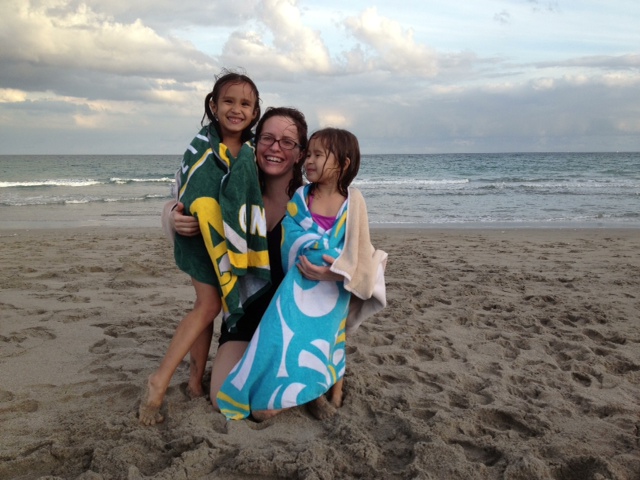
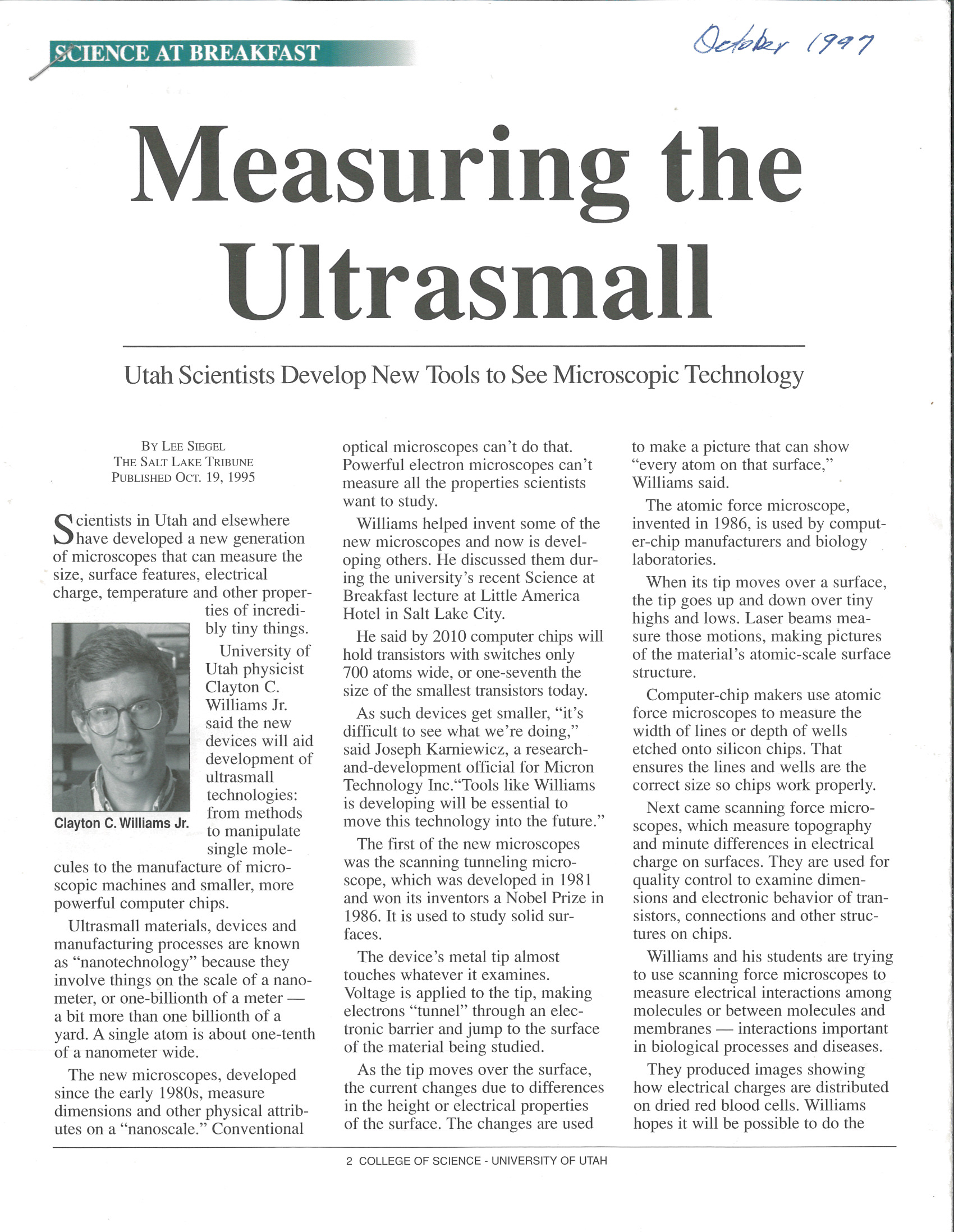
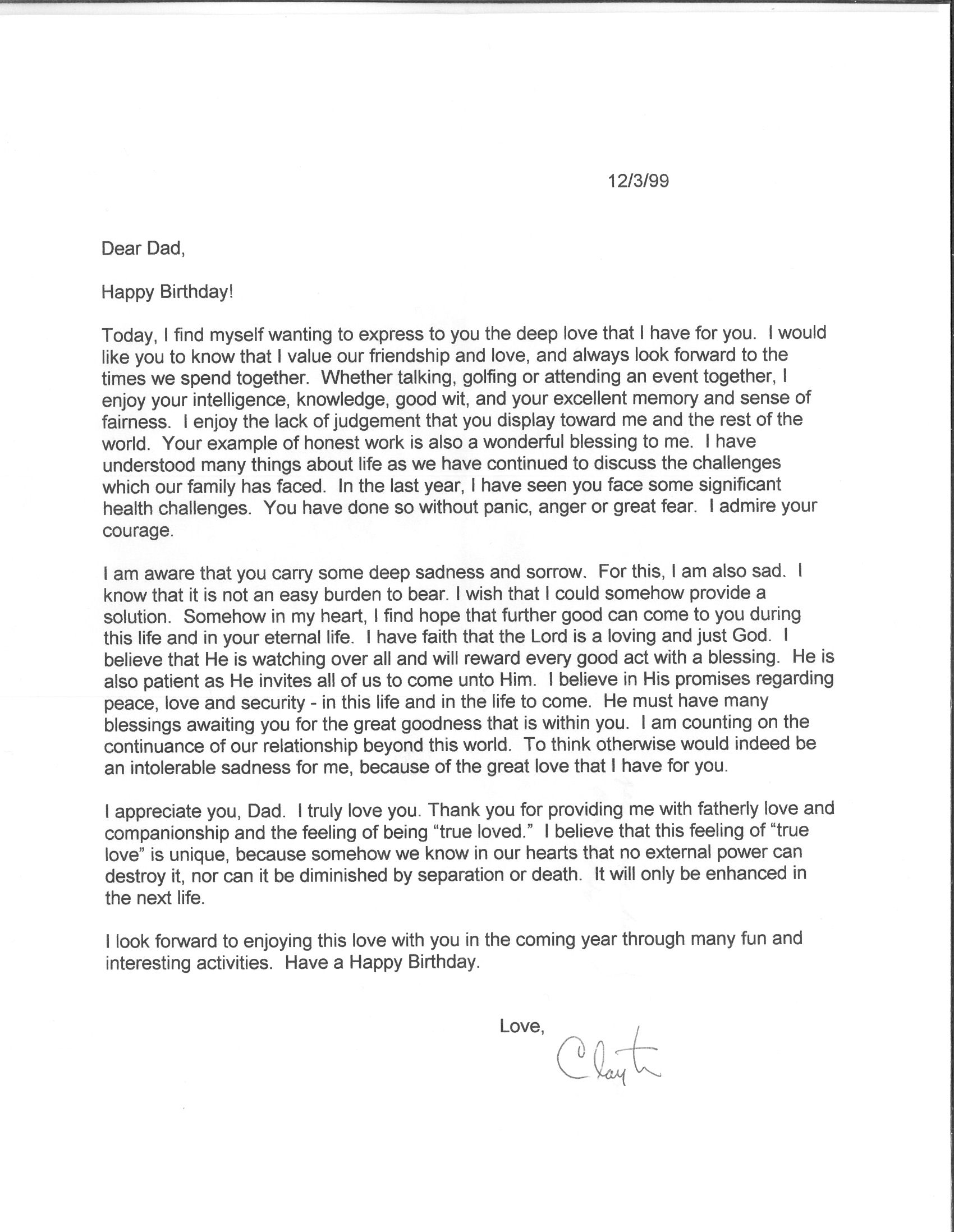
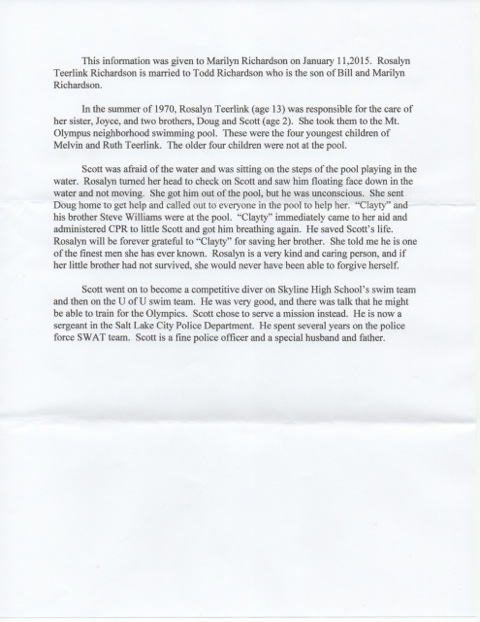
Section Dedicated to Clayton Covey WilliamsPicture Gallery of CCW:
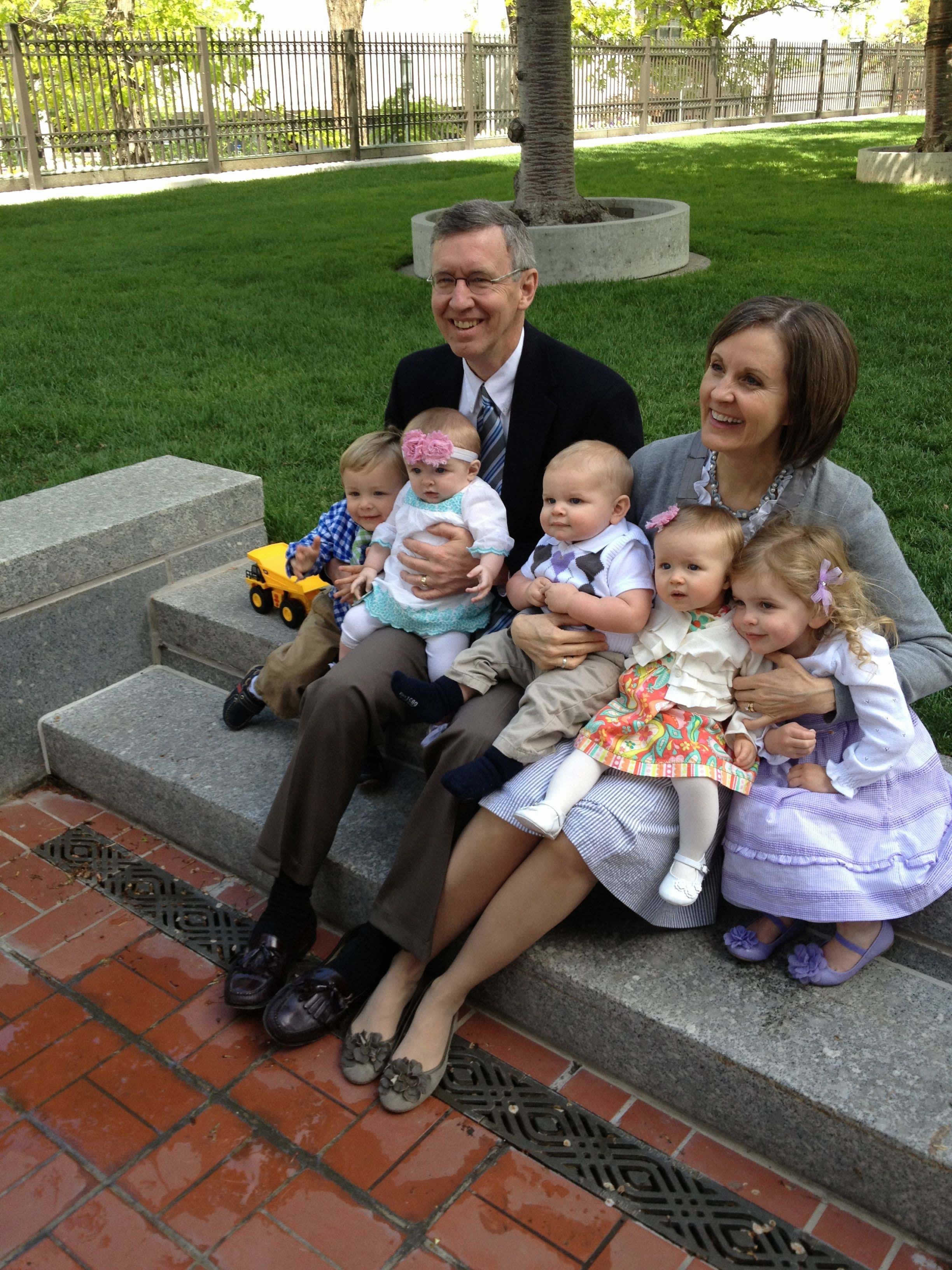


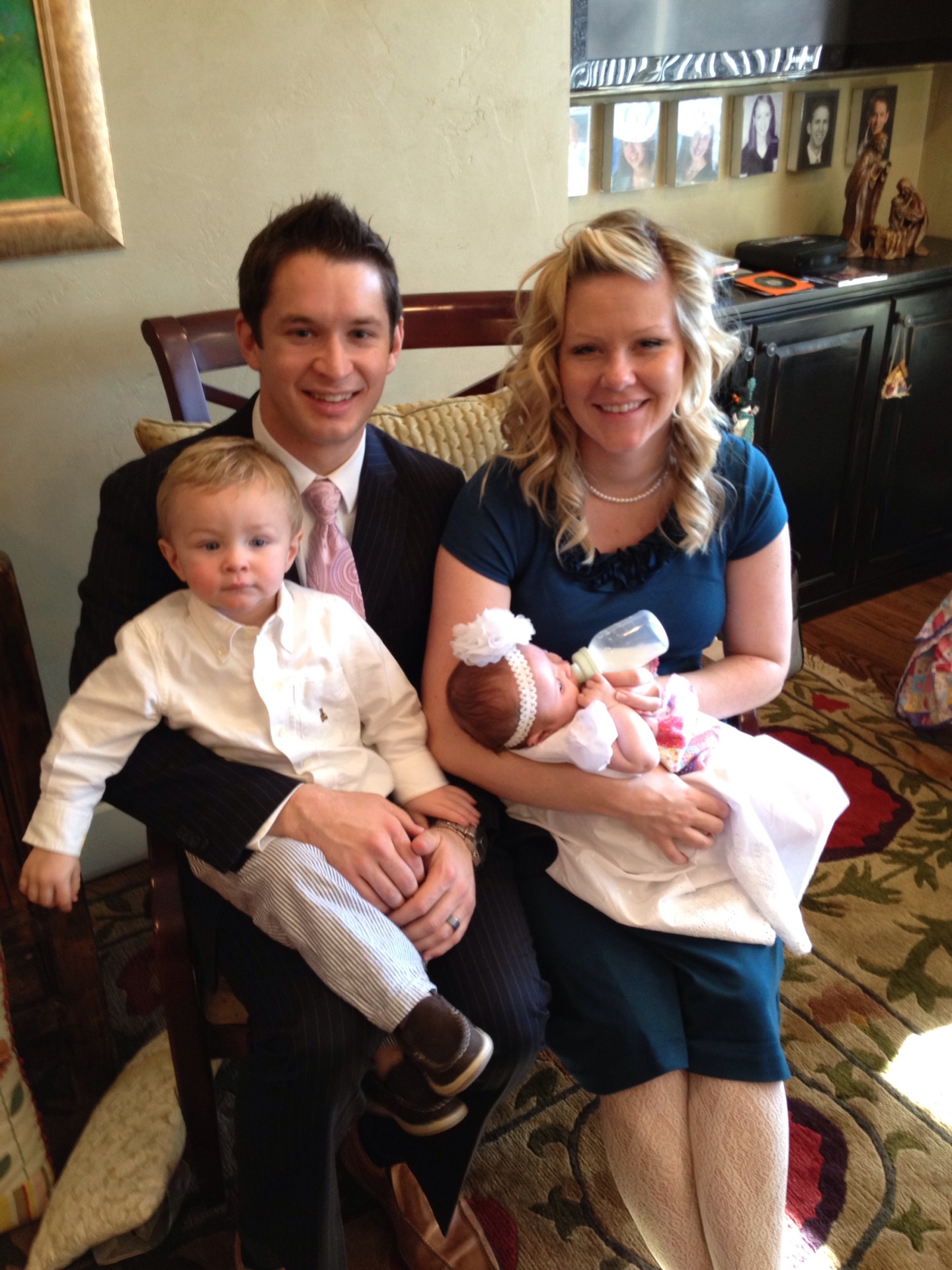


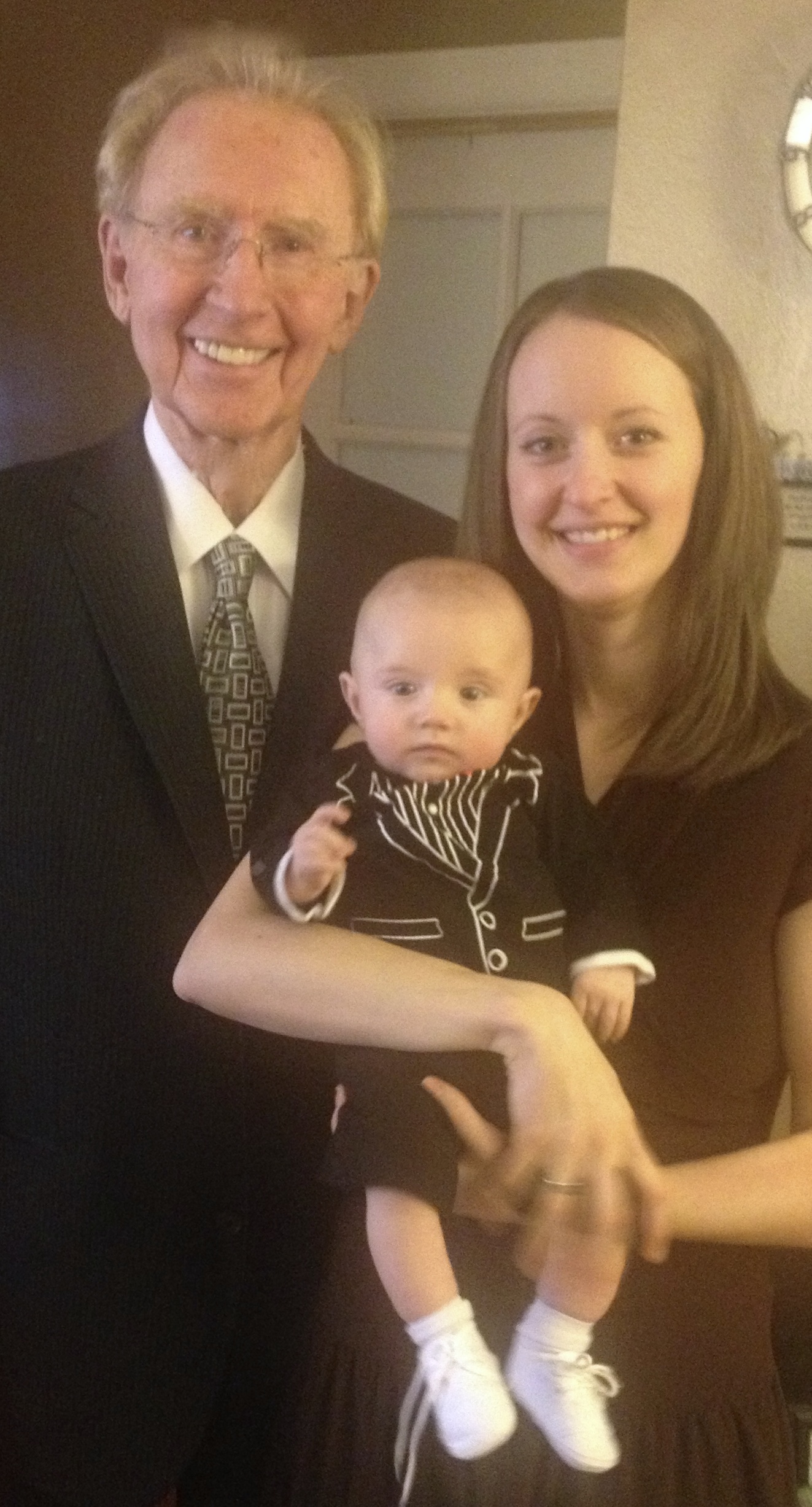


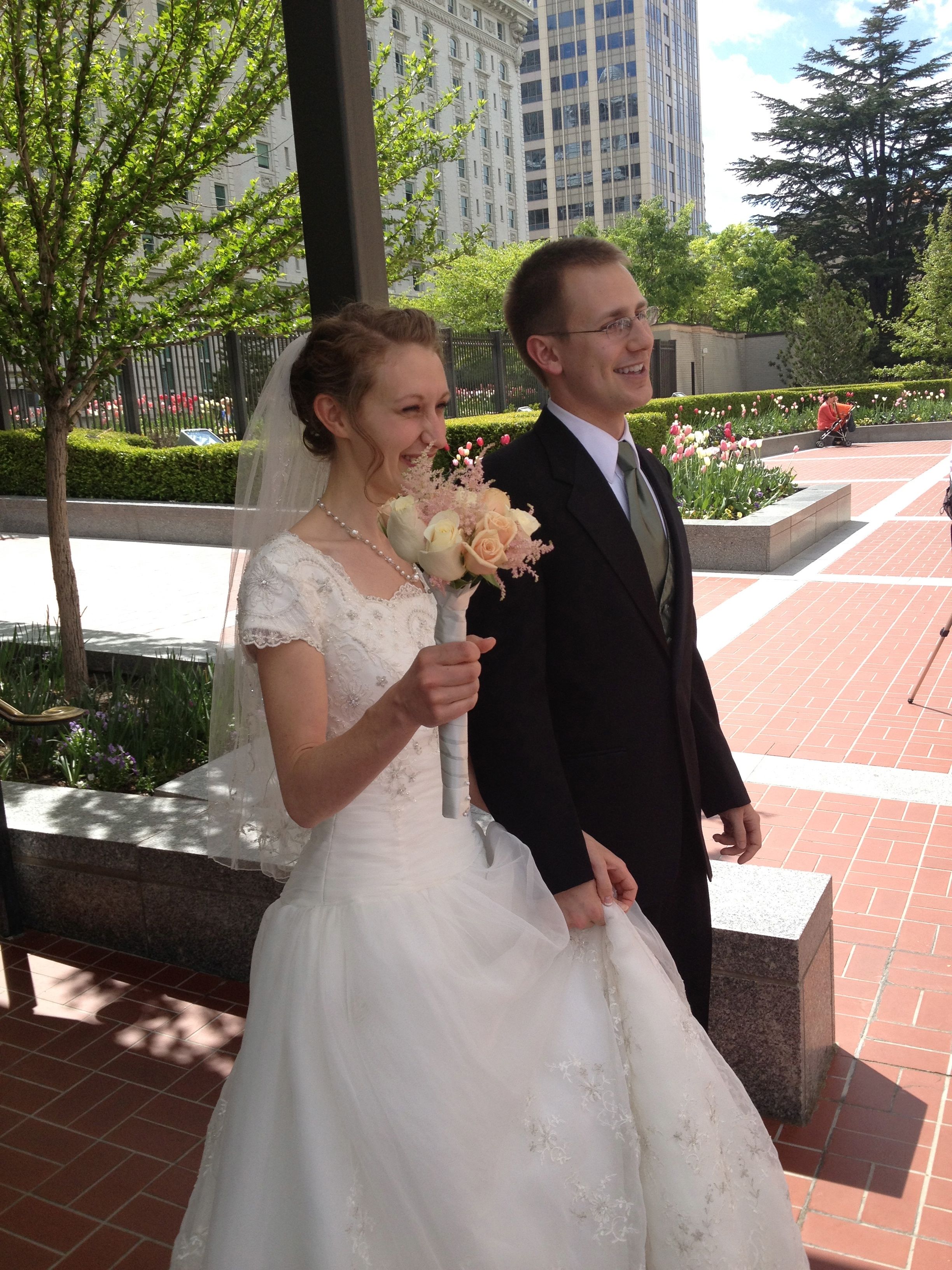


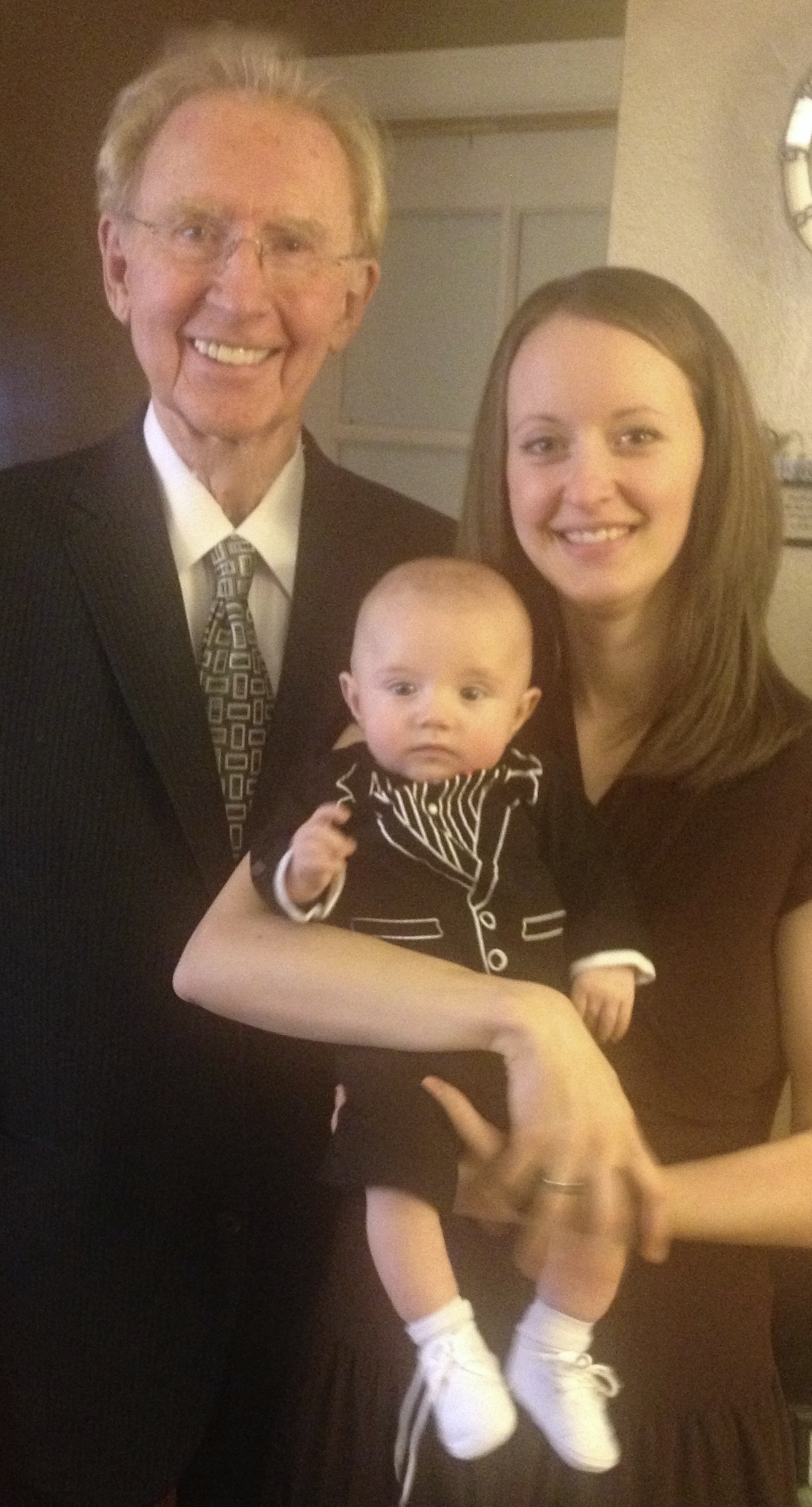

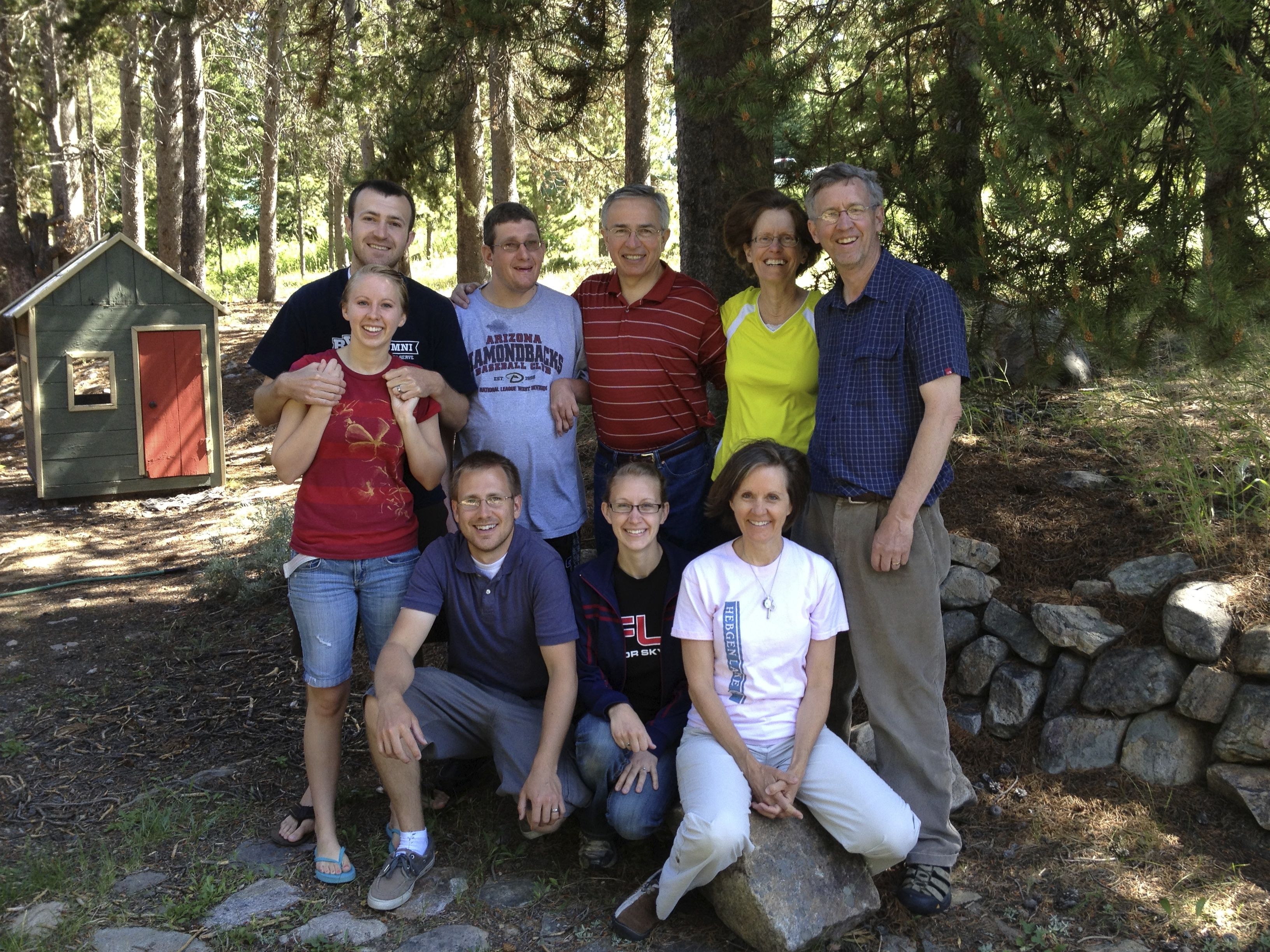


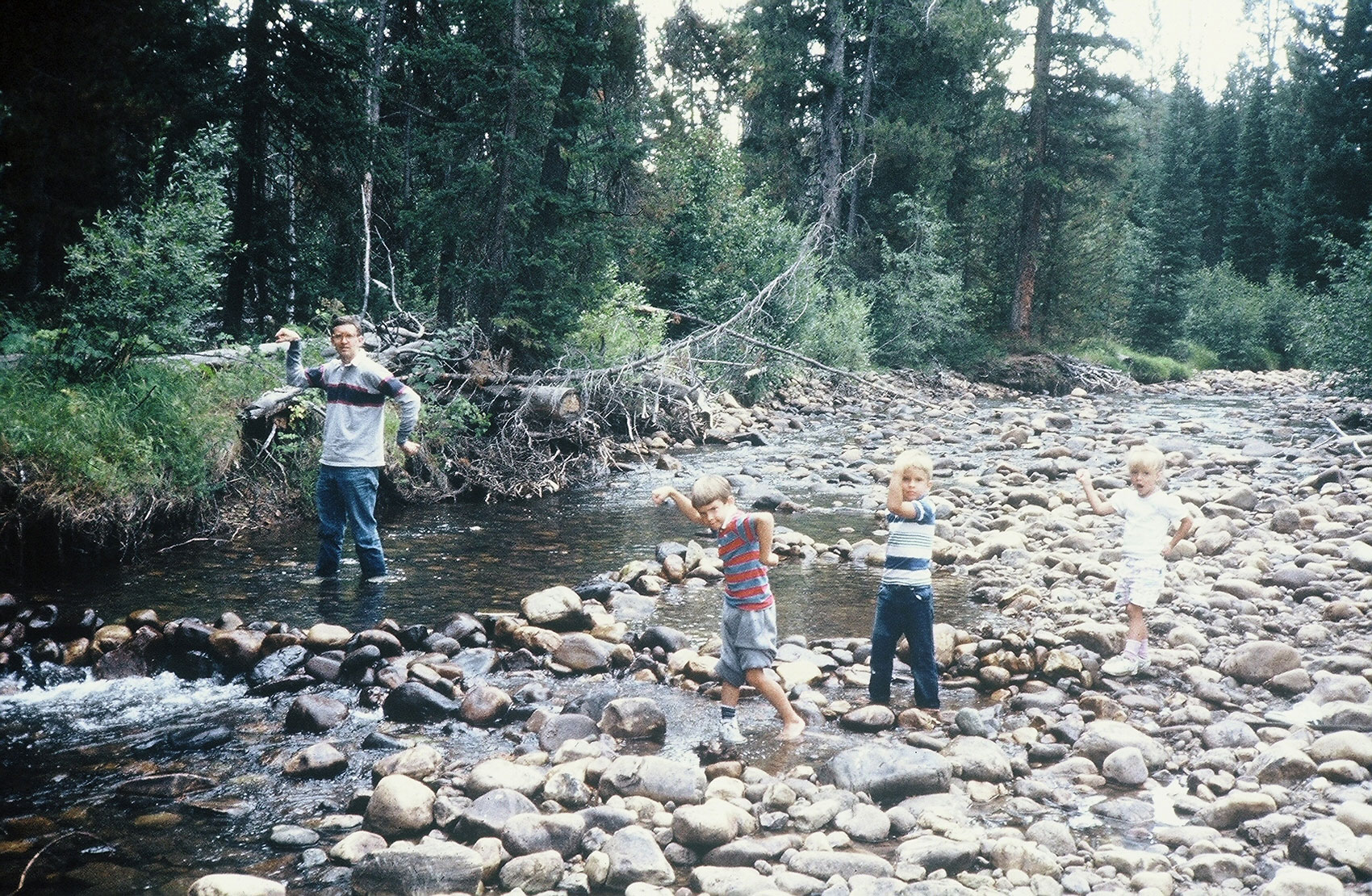

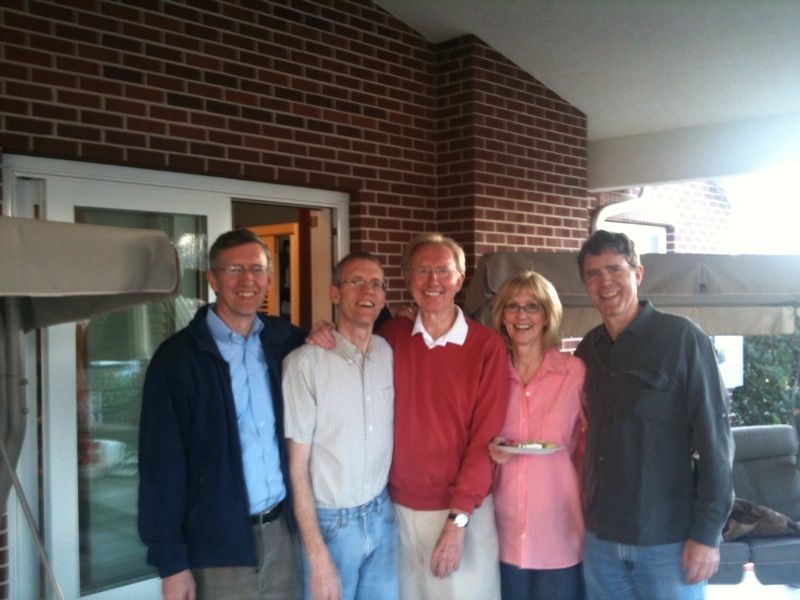


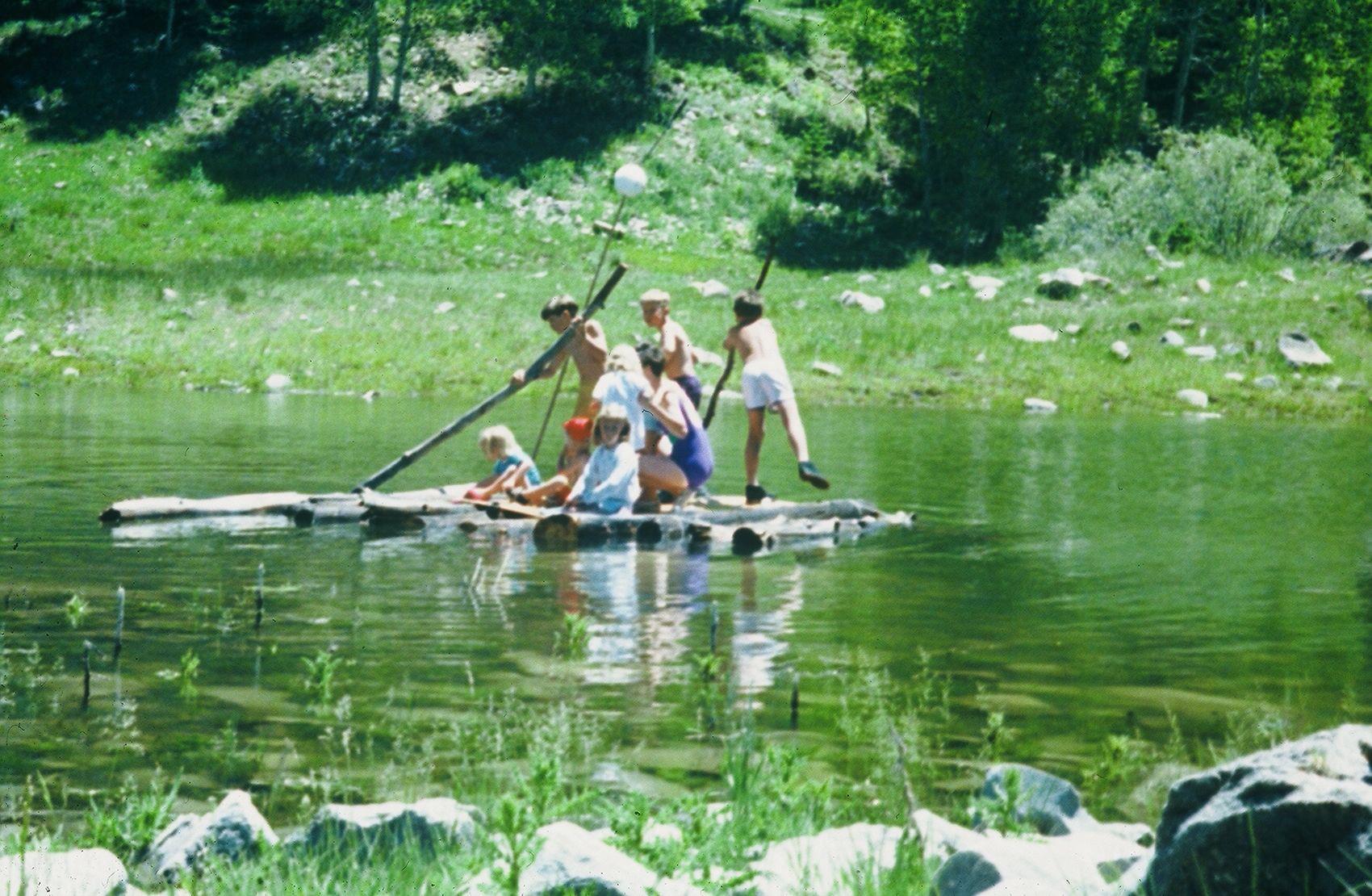


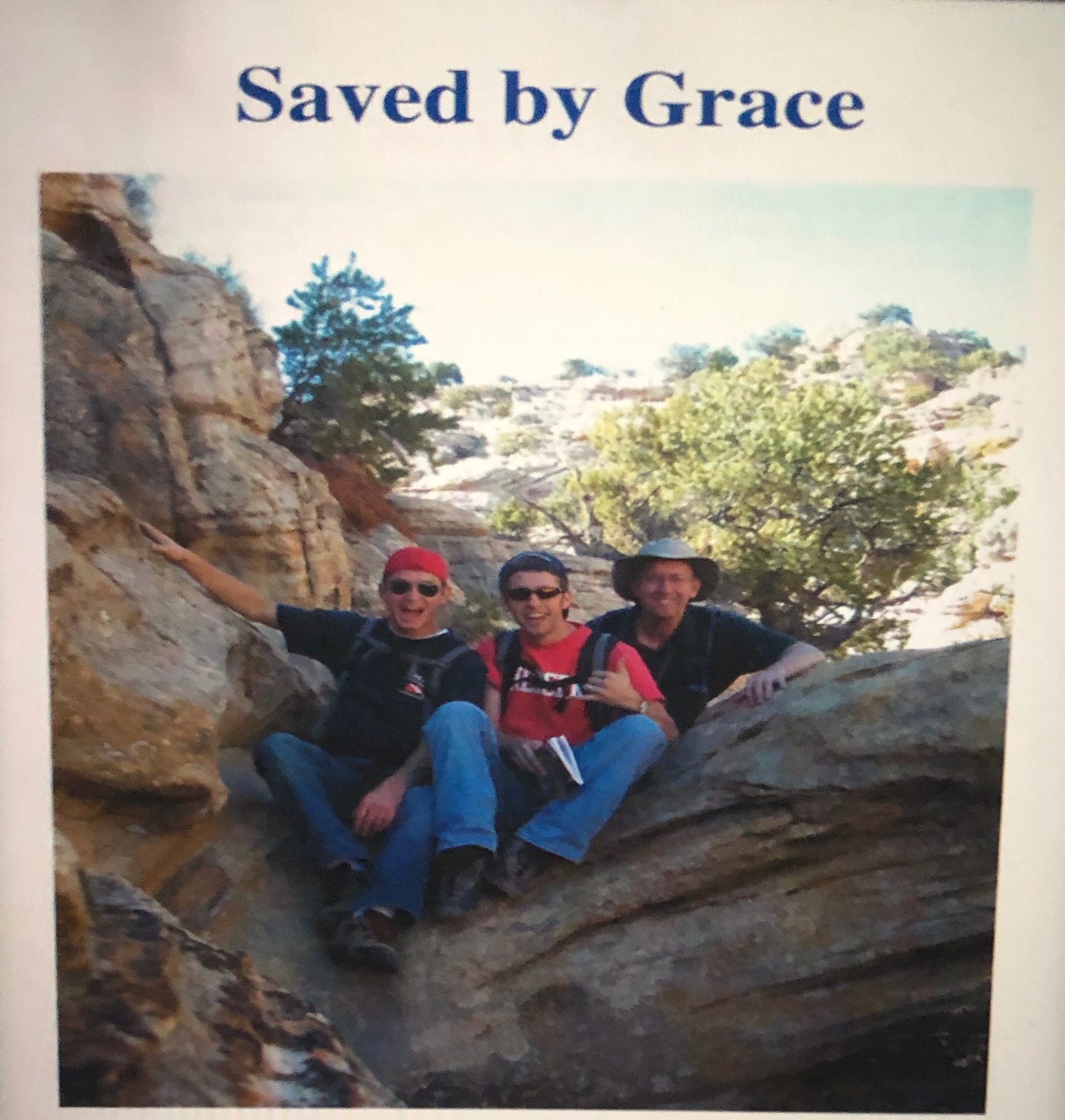


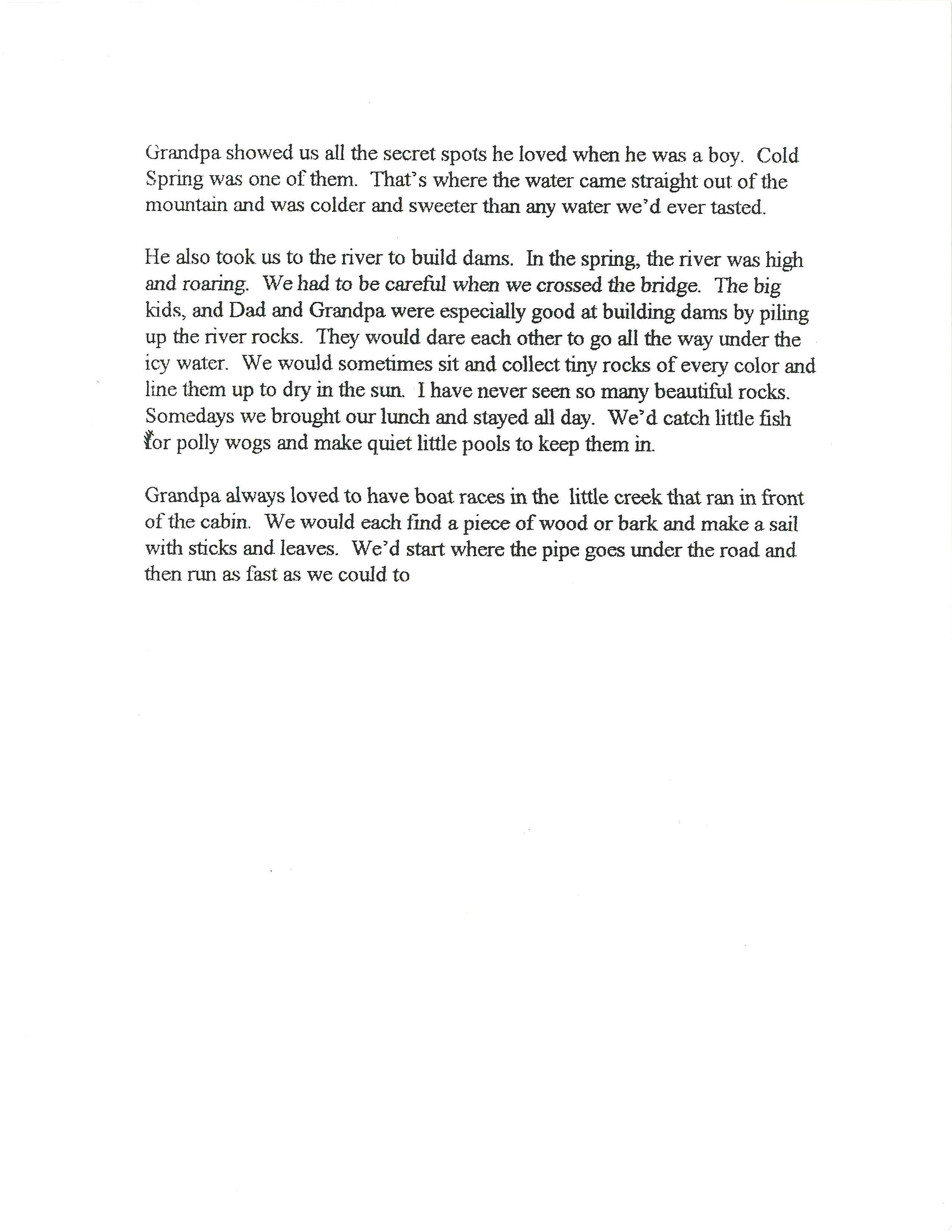
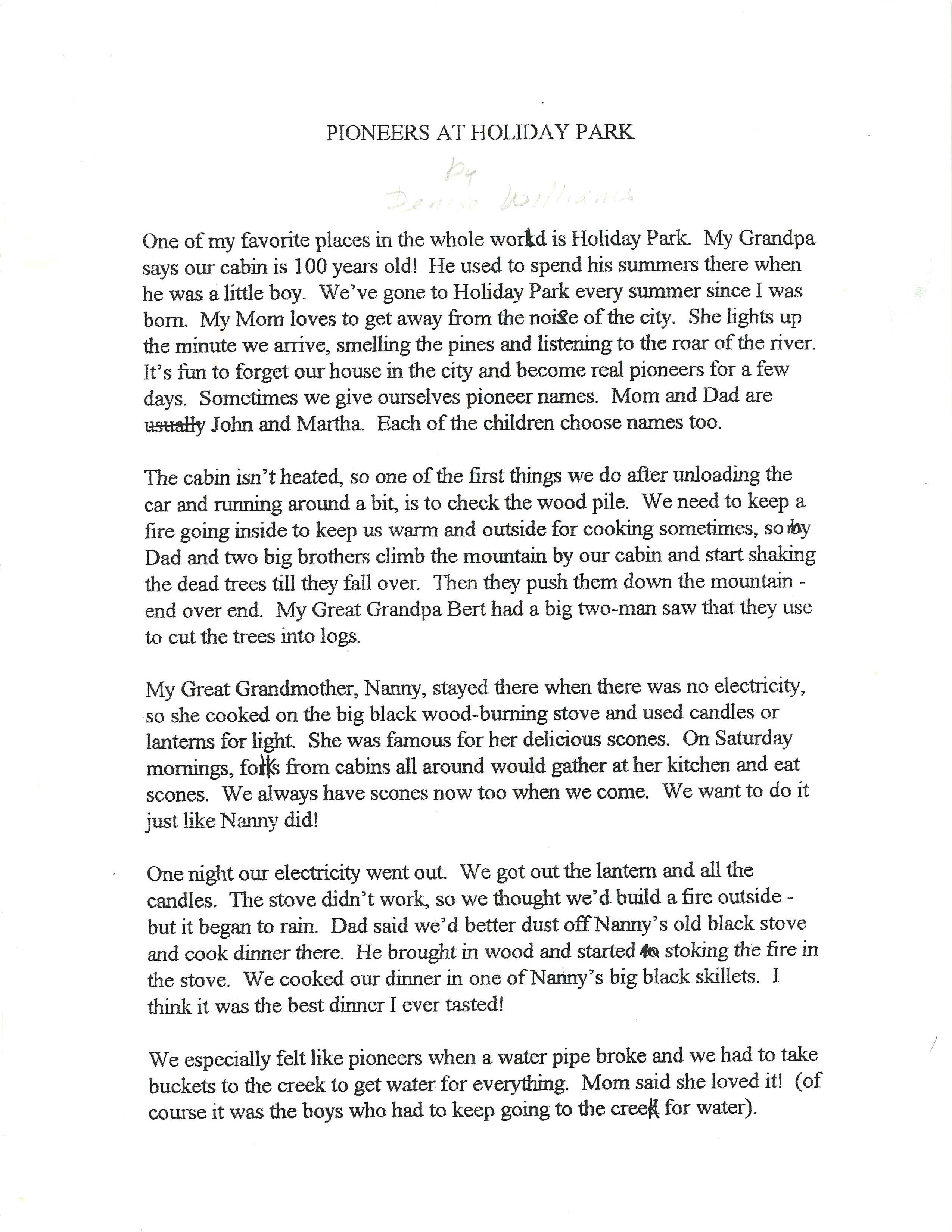


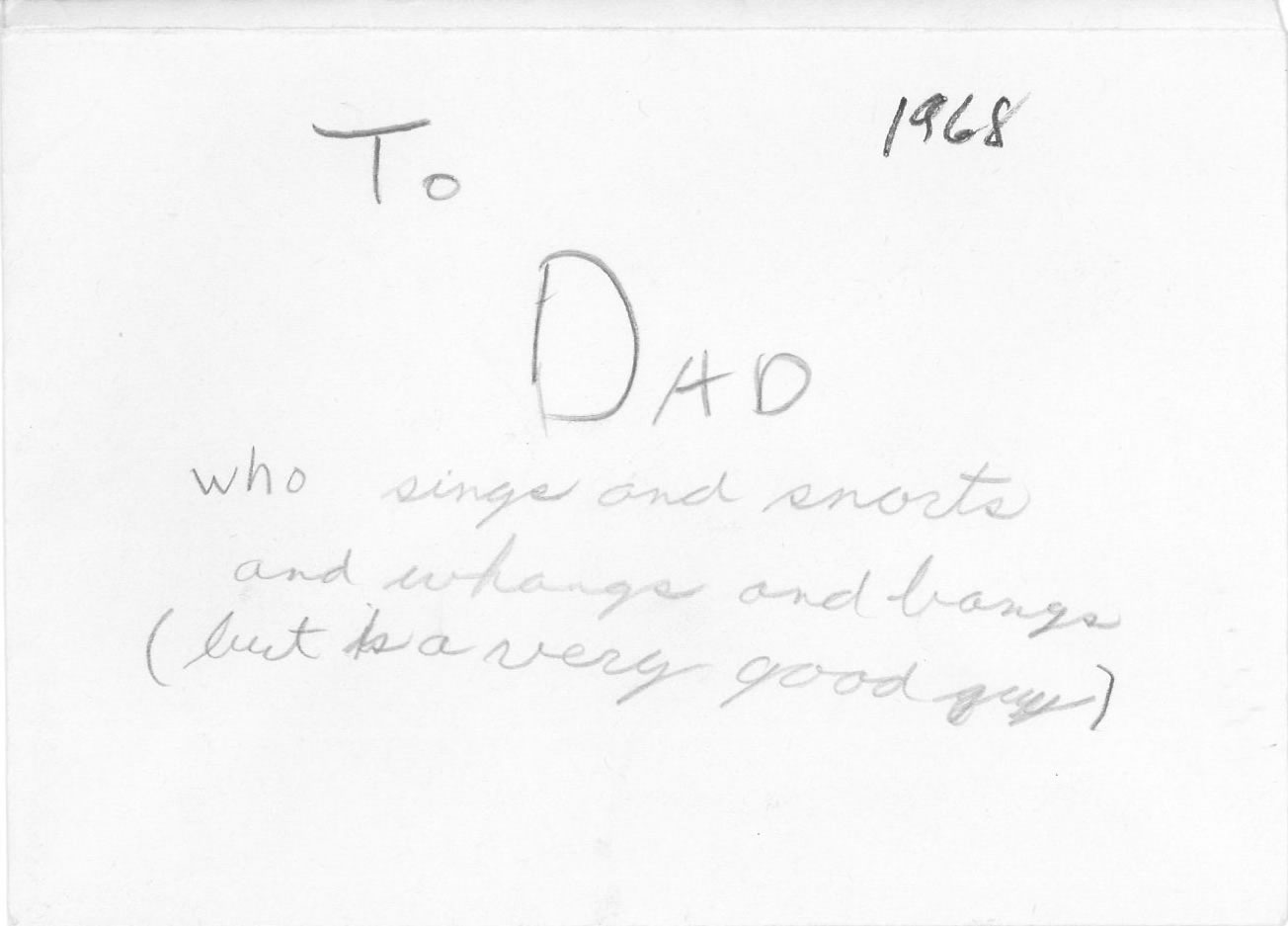
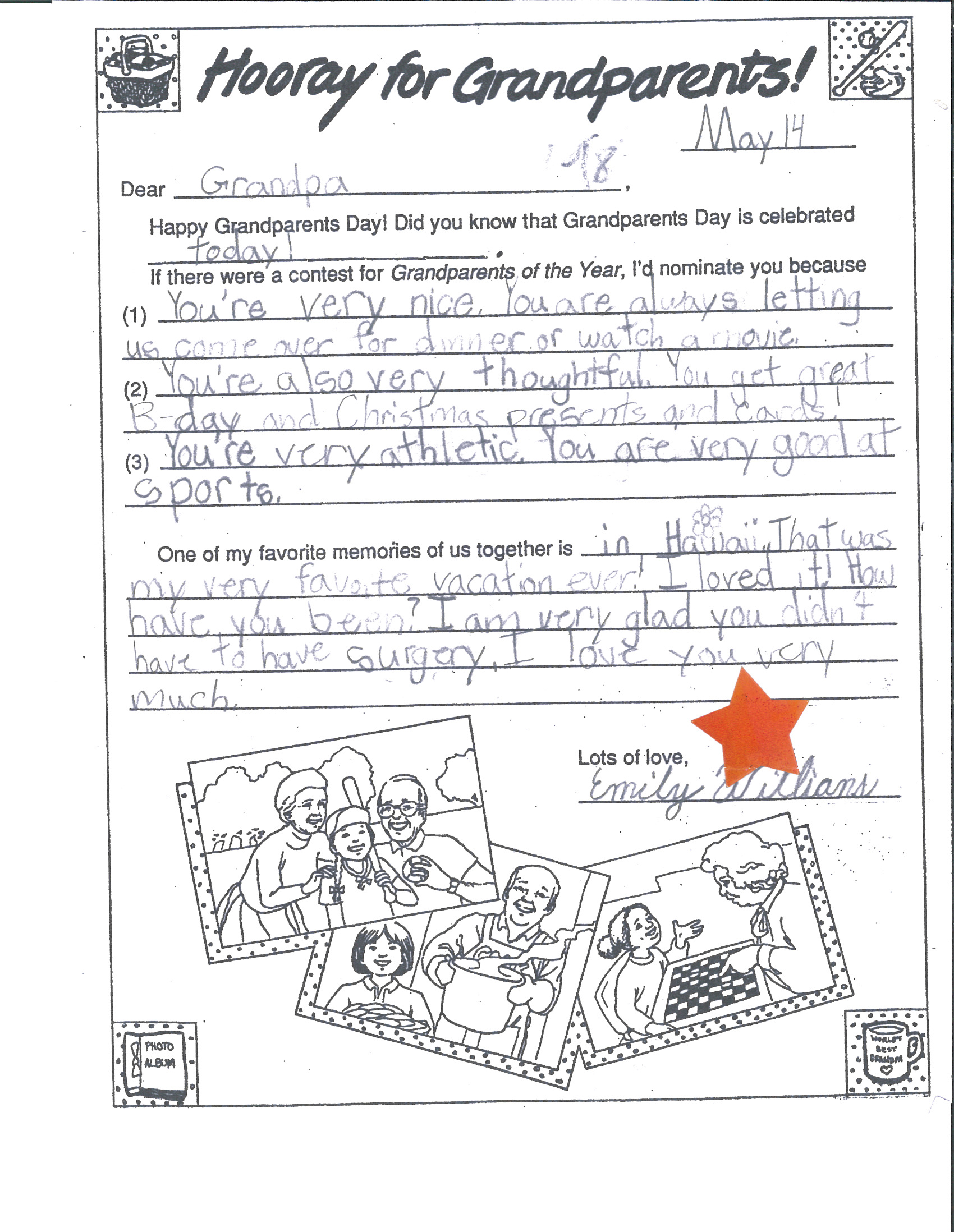


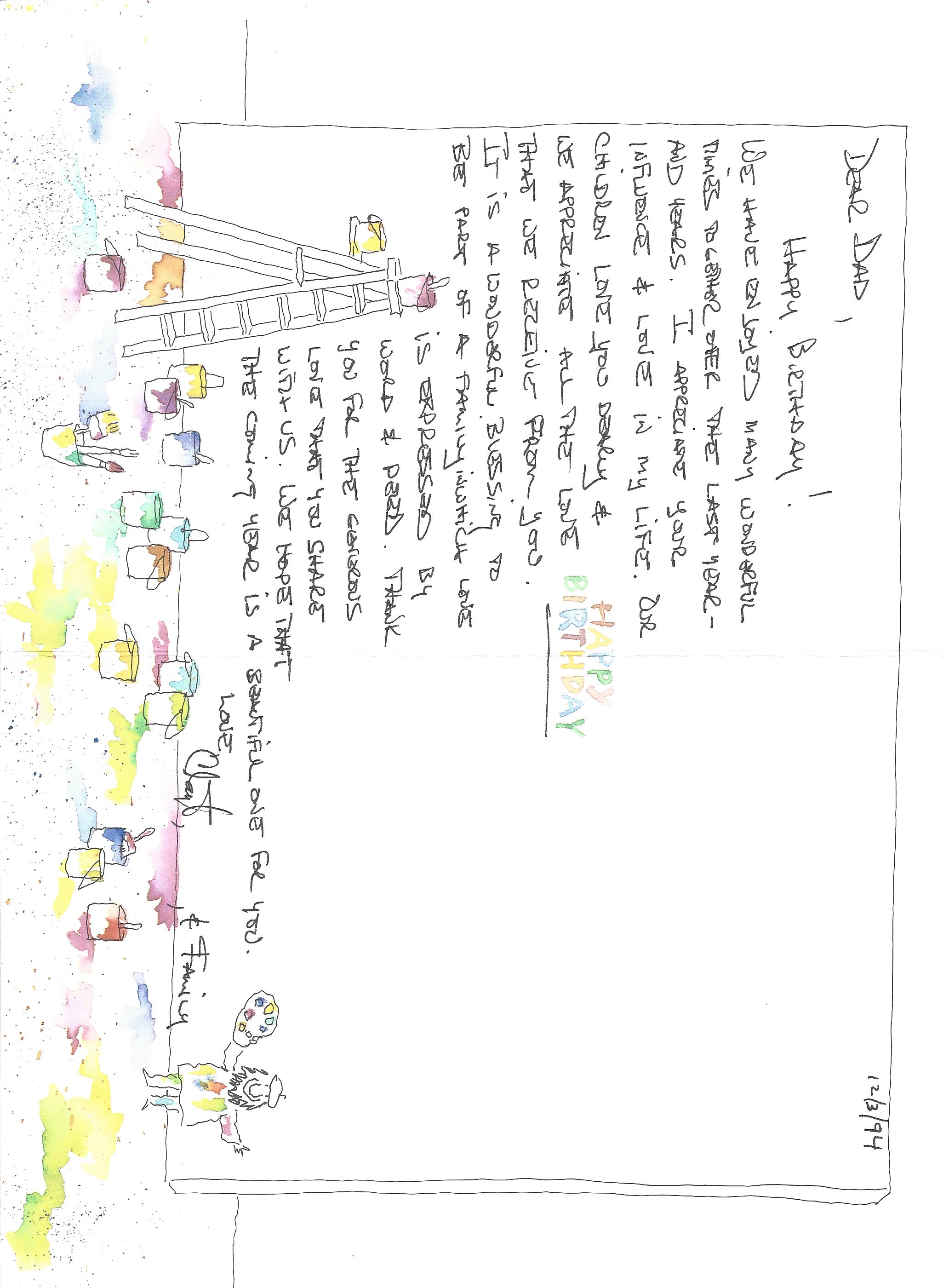
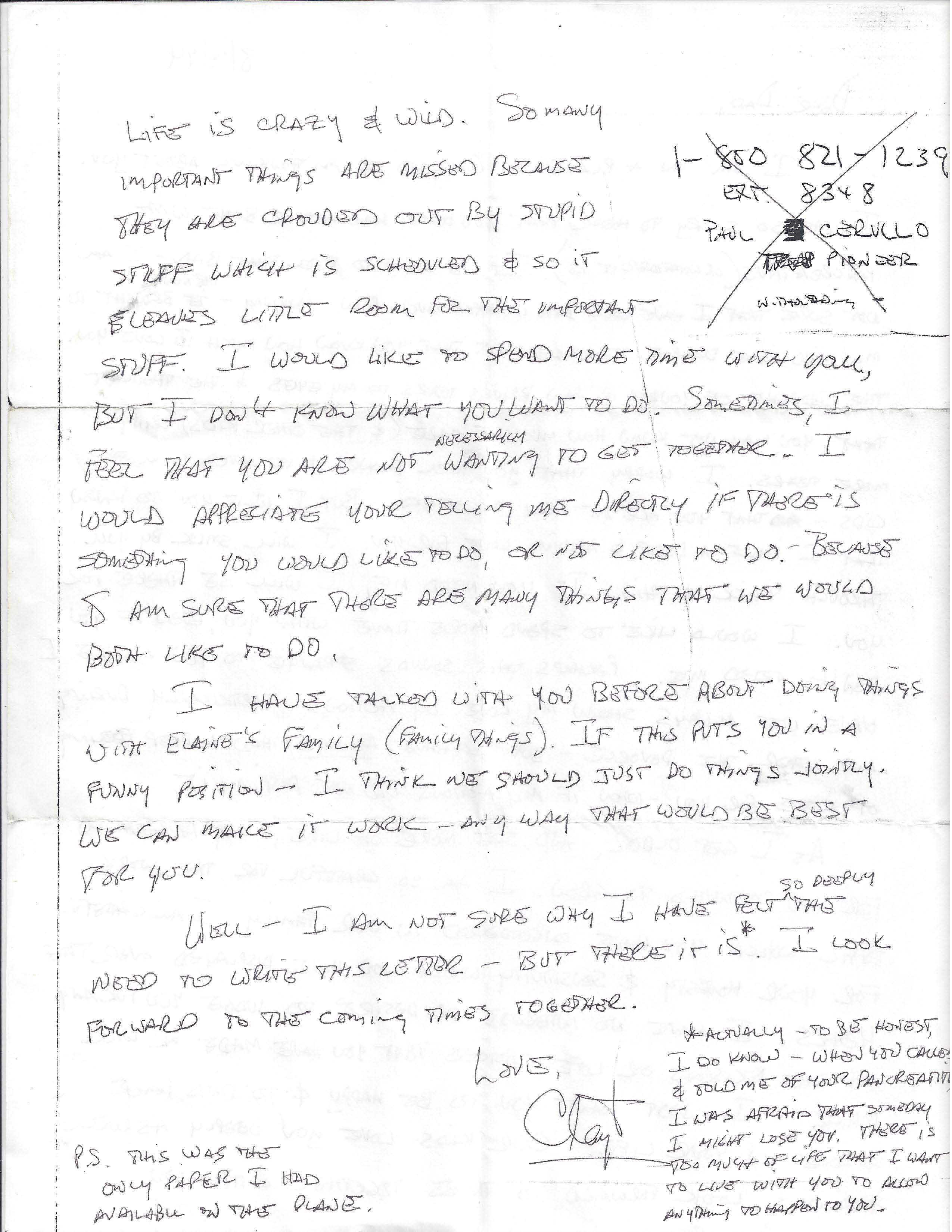
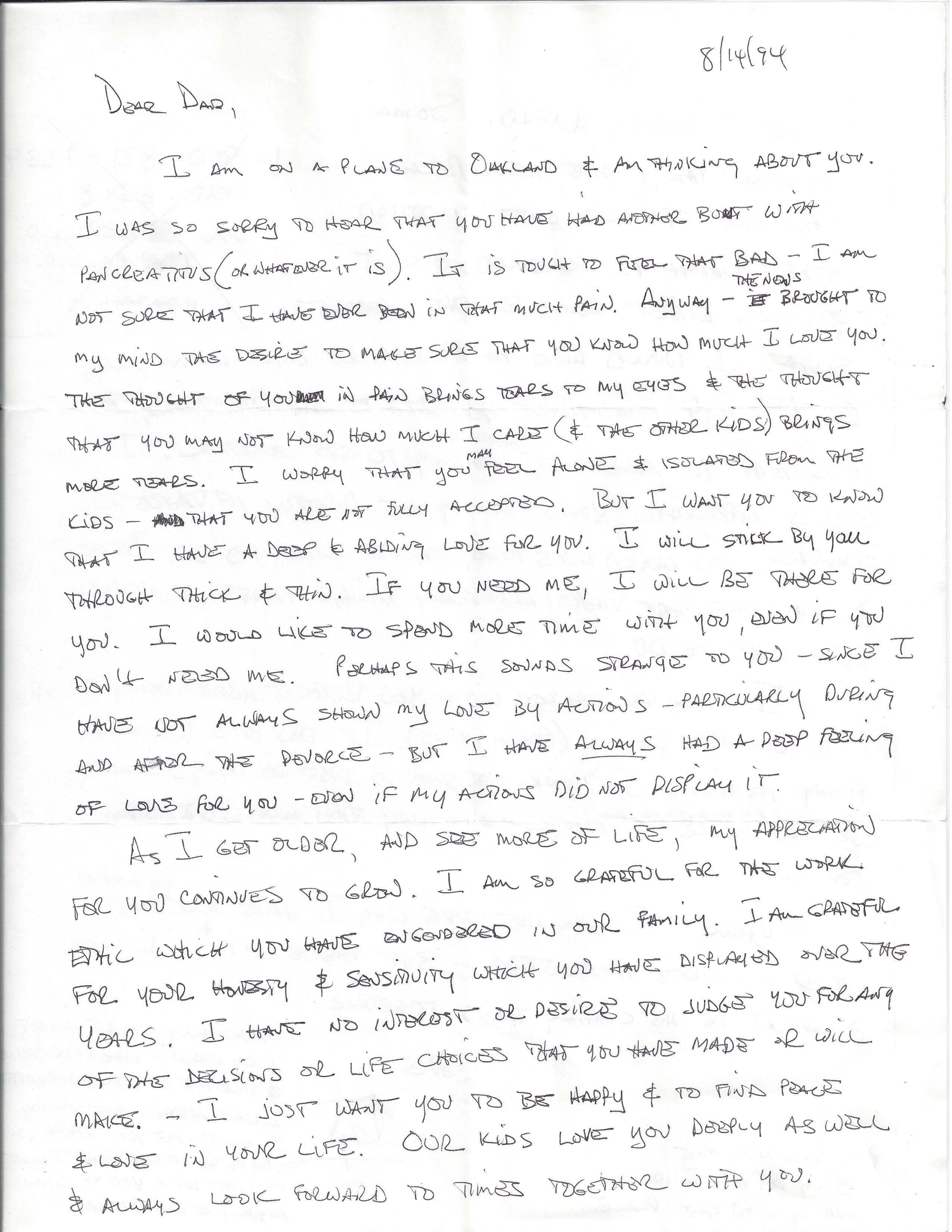

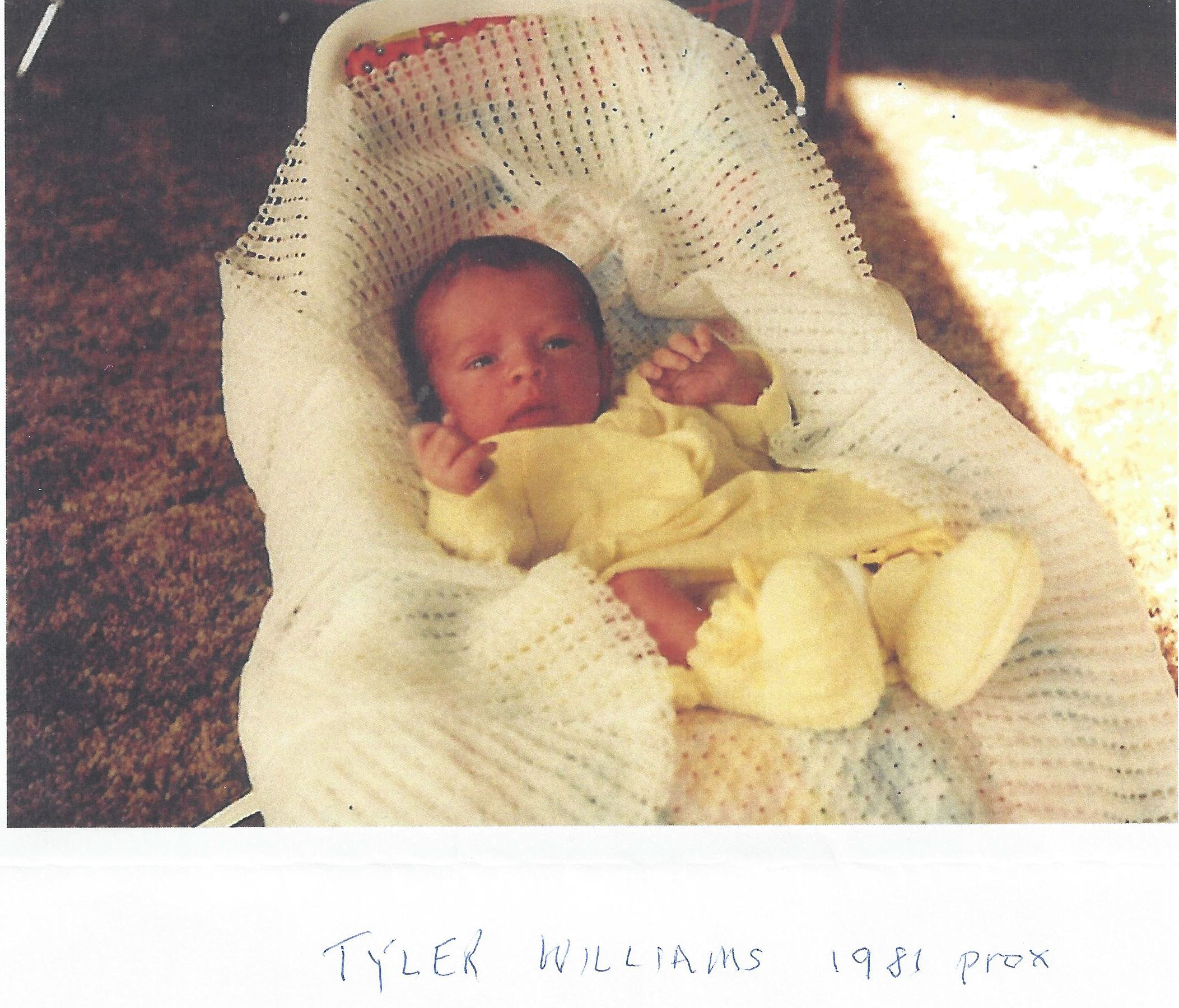

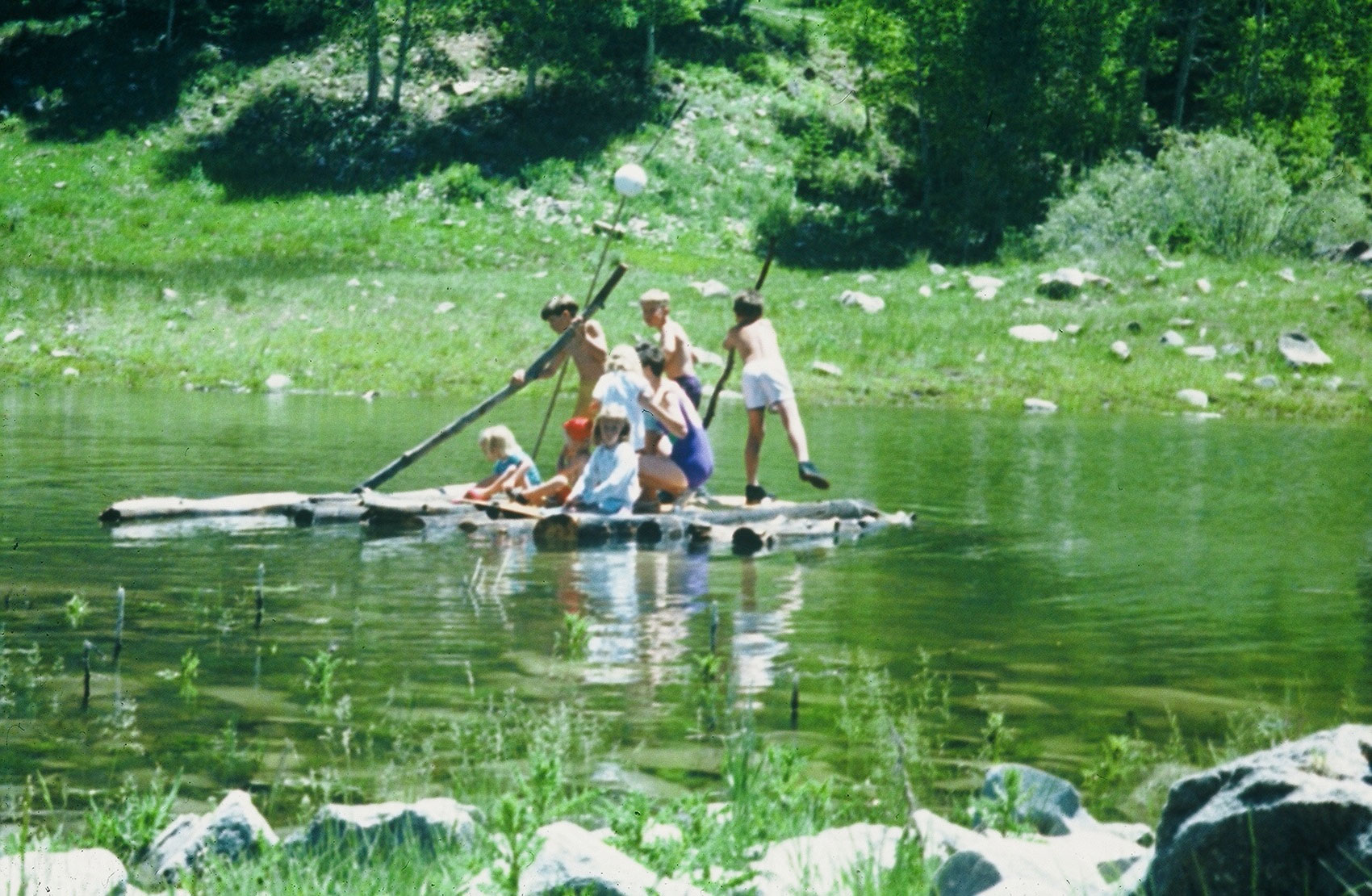
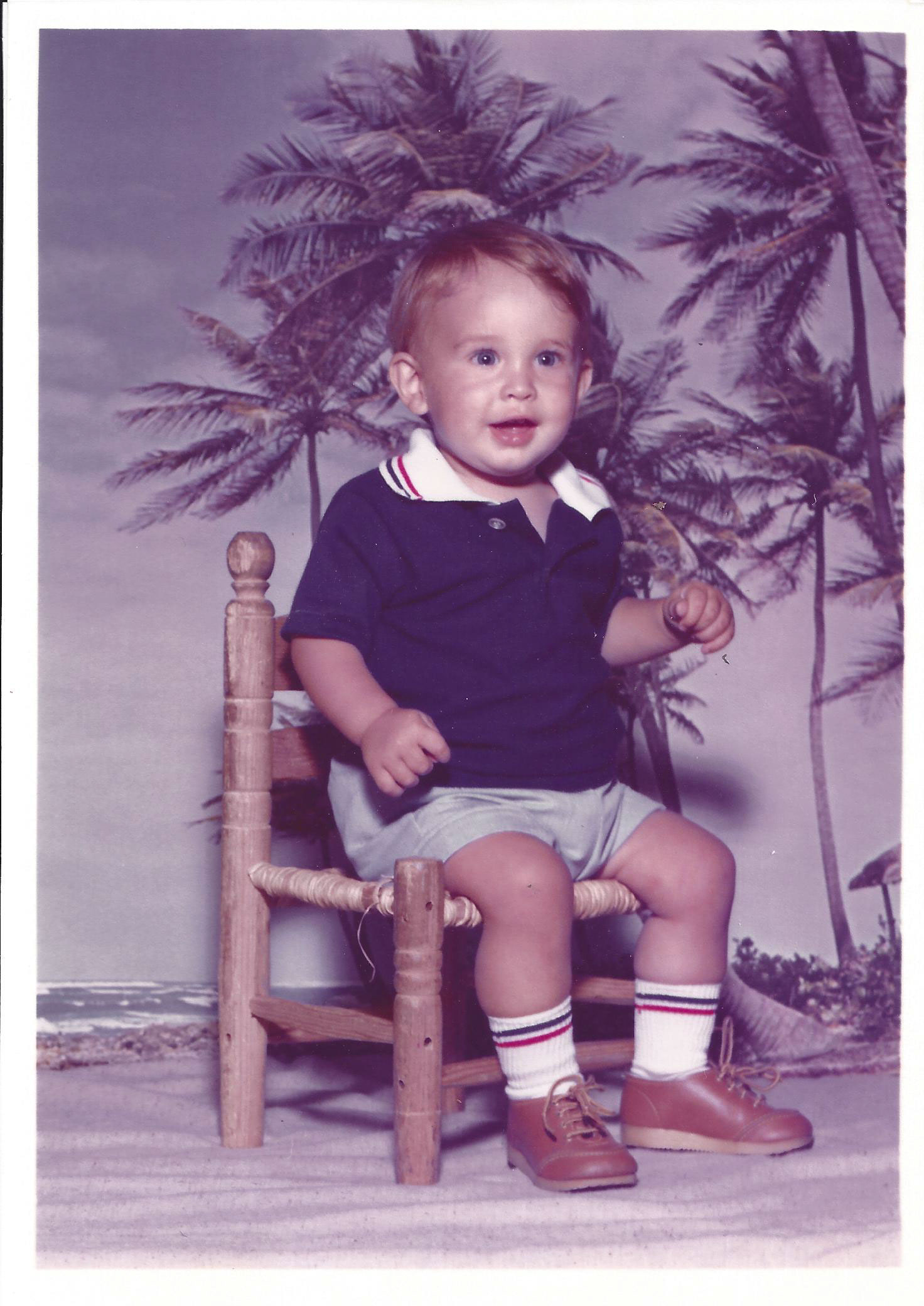


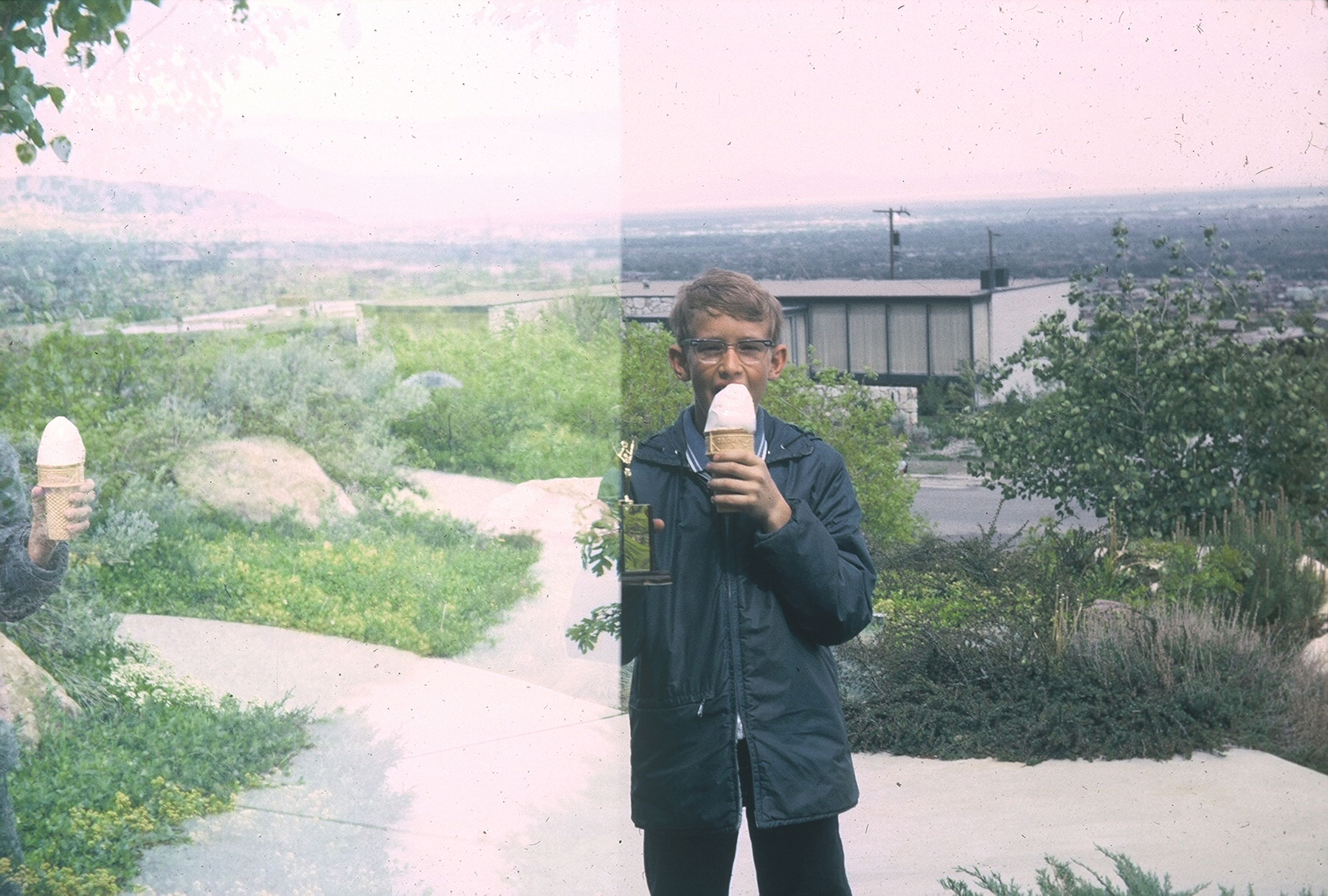




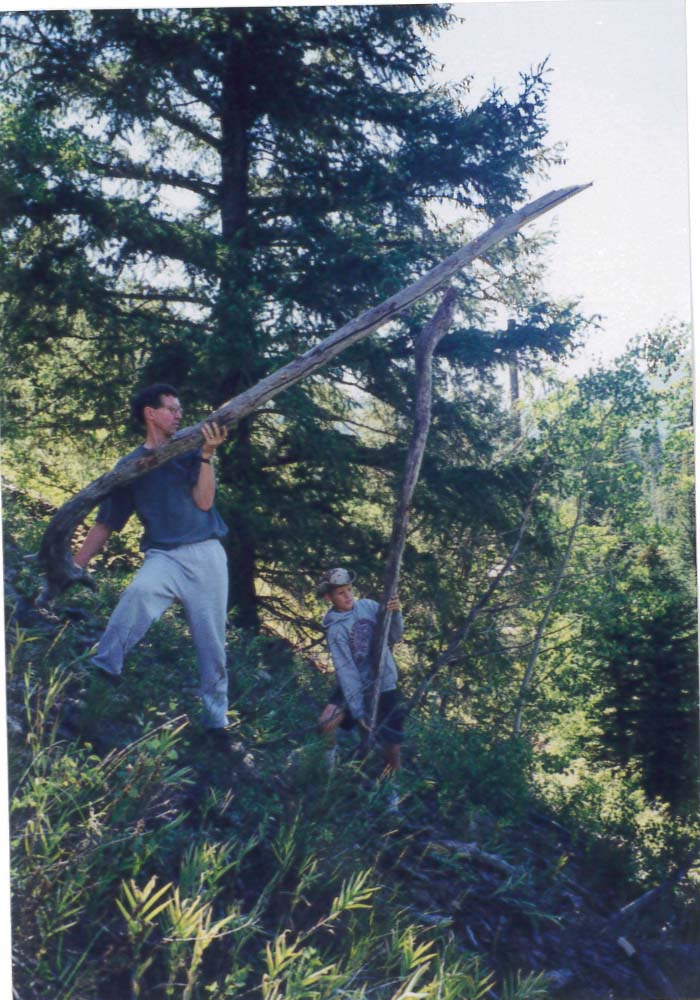


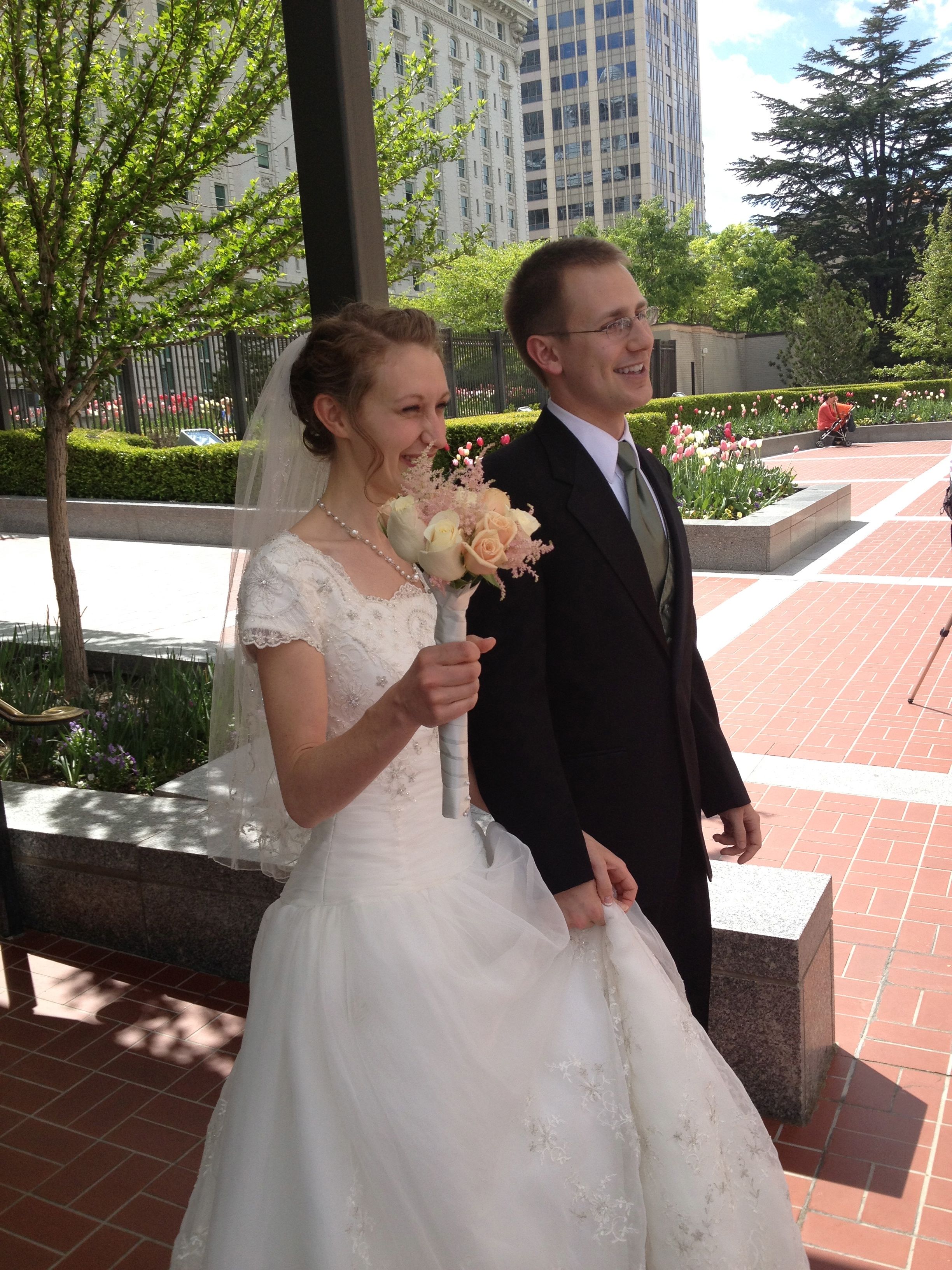
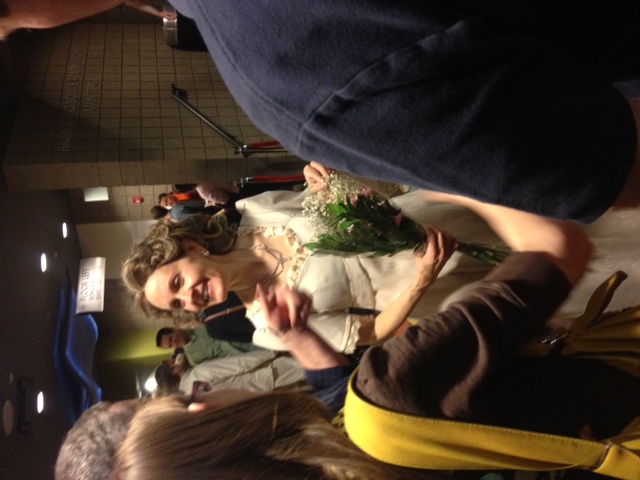


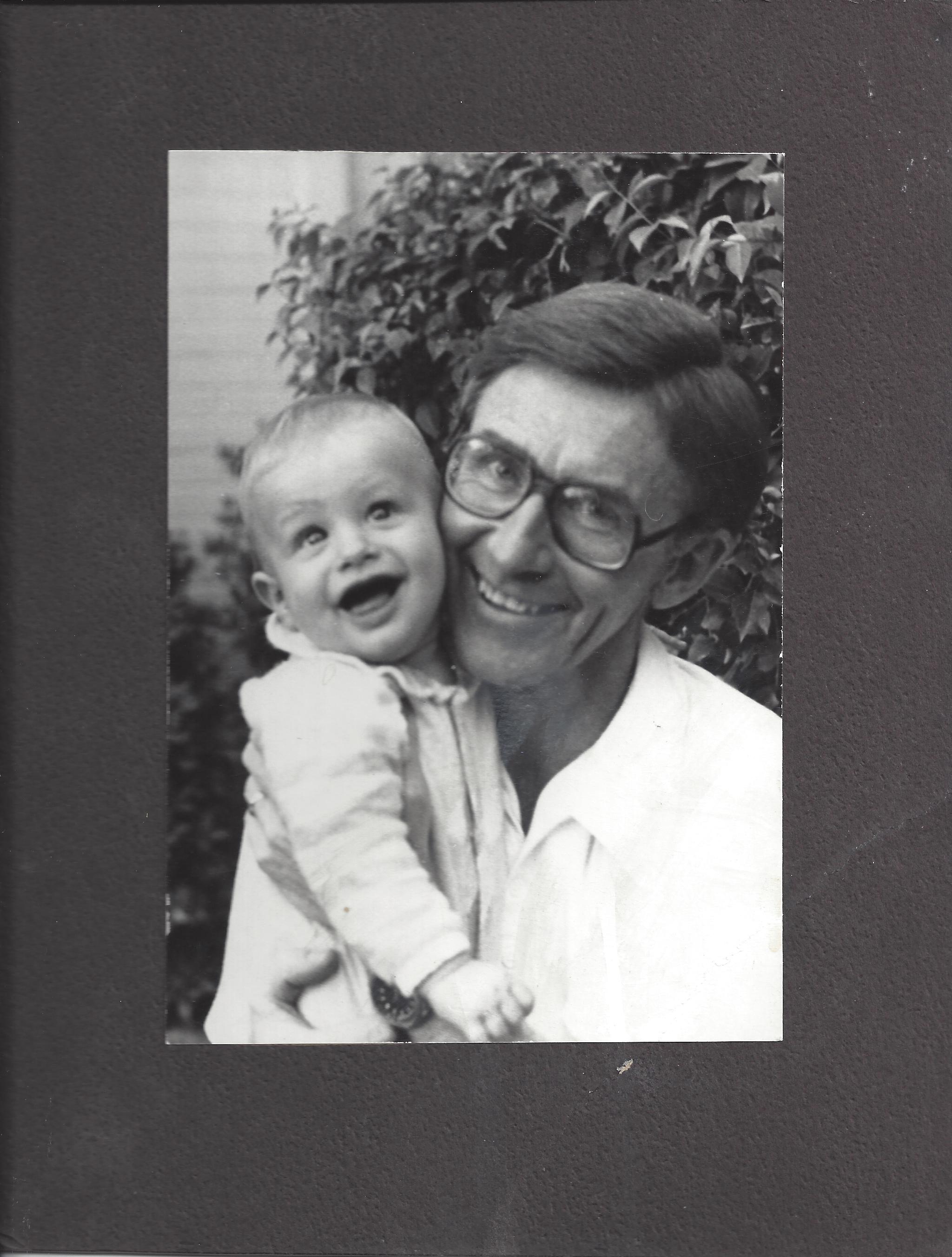








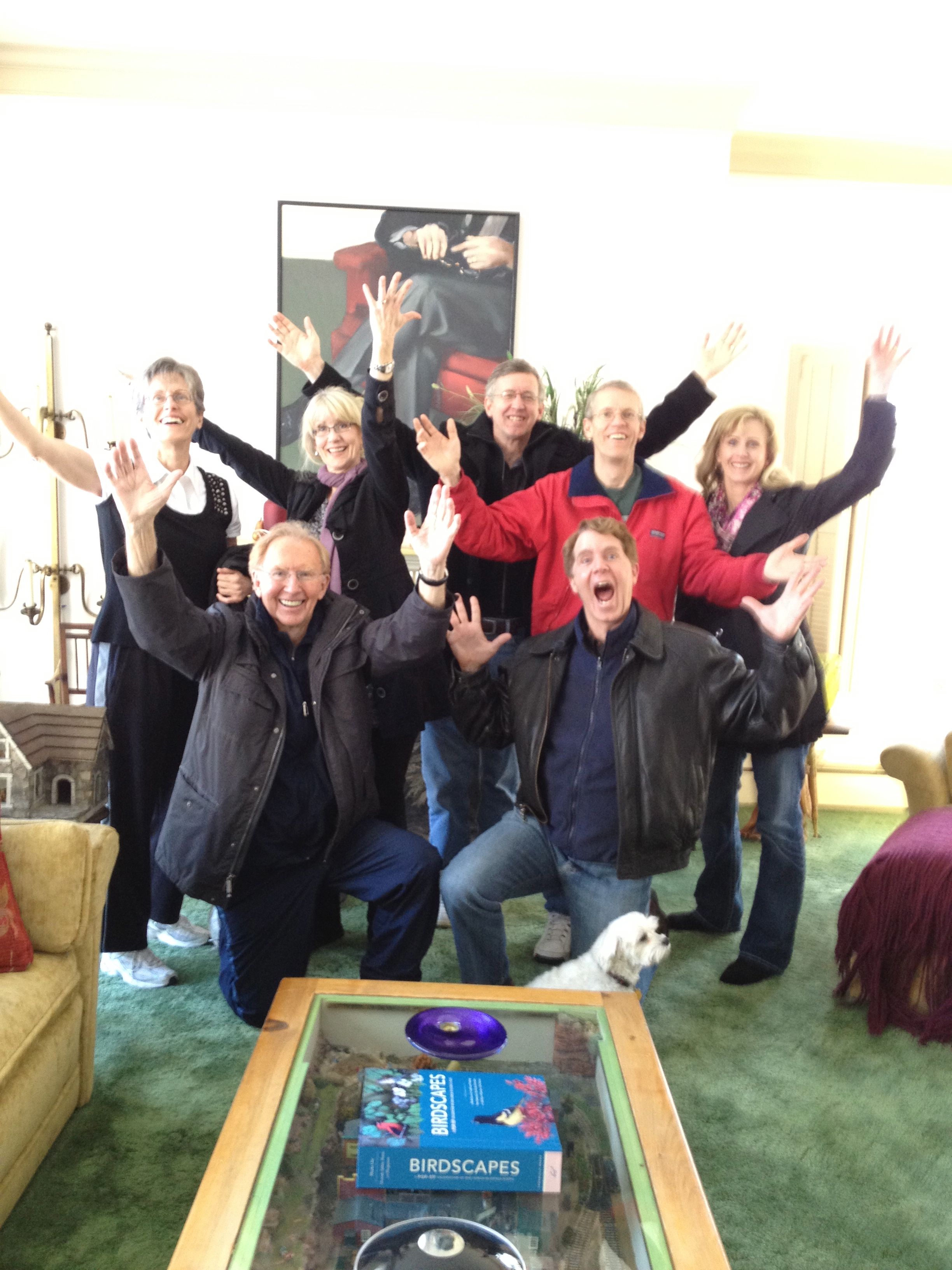


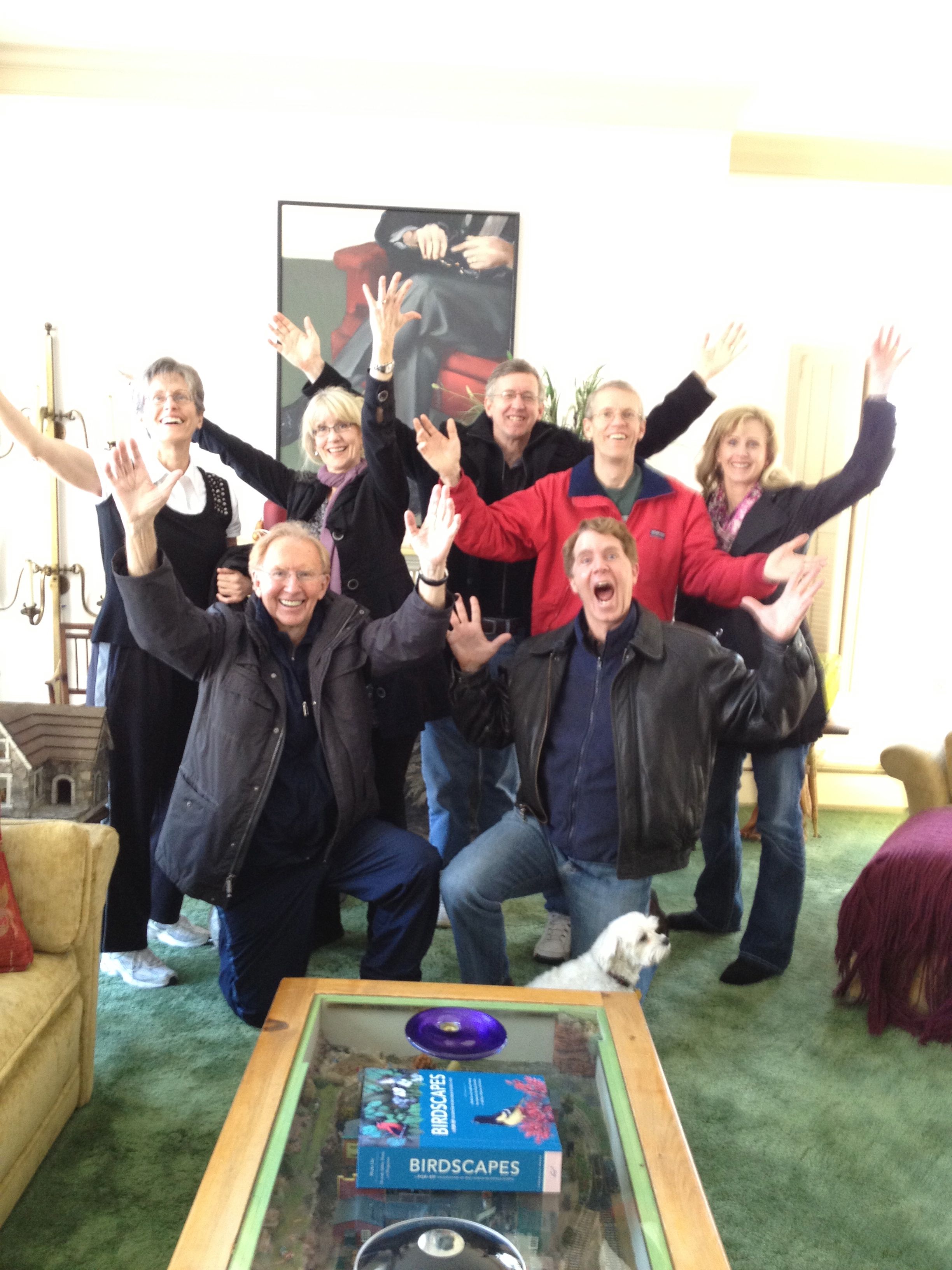


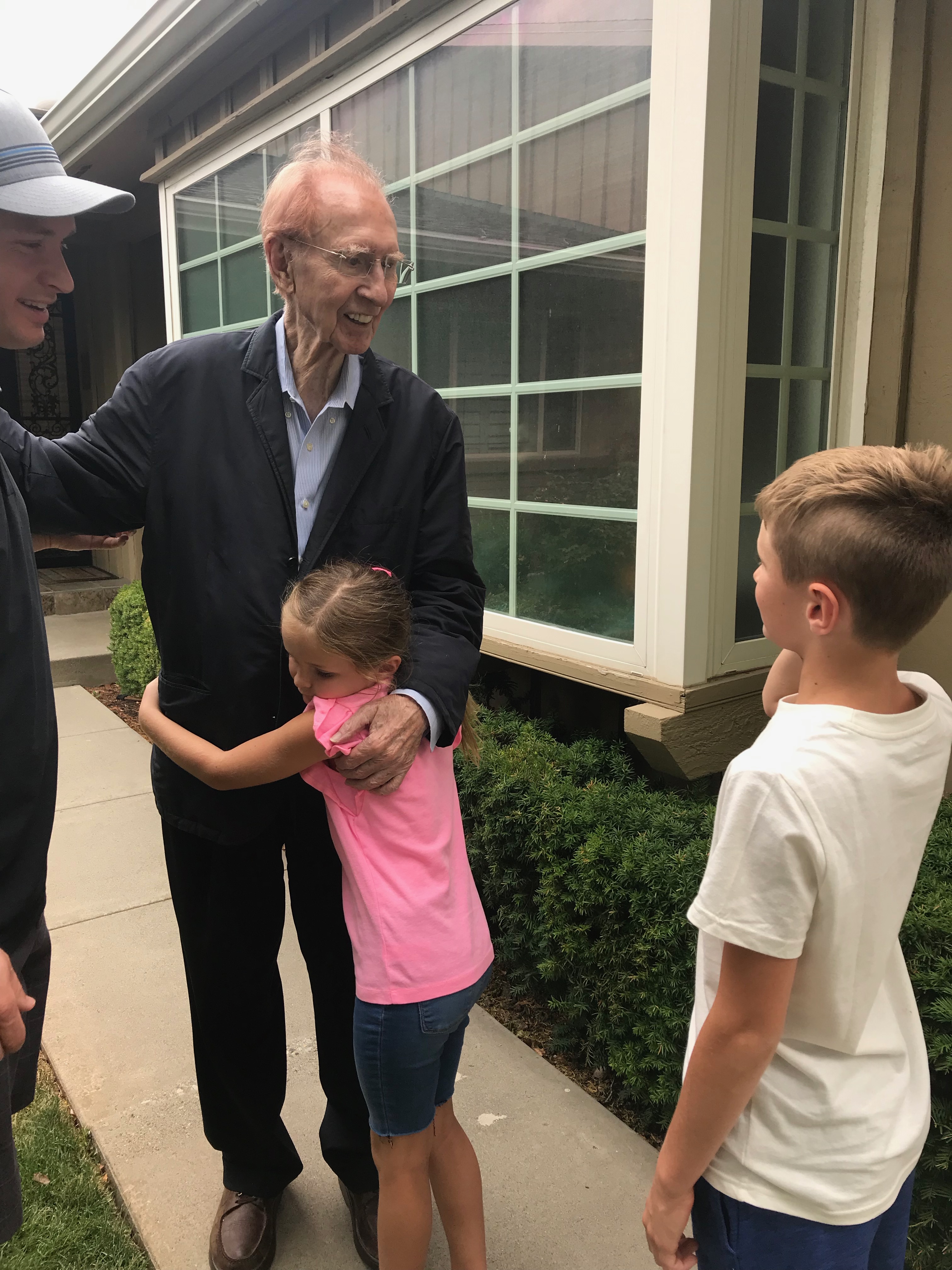


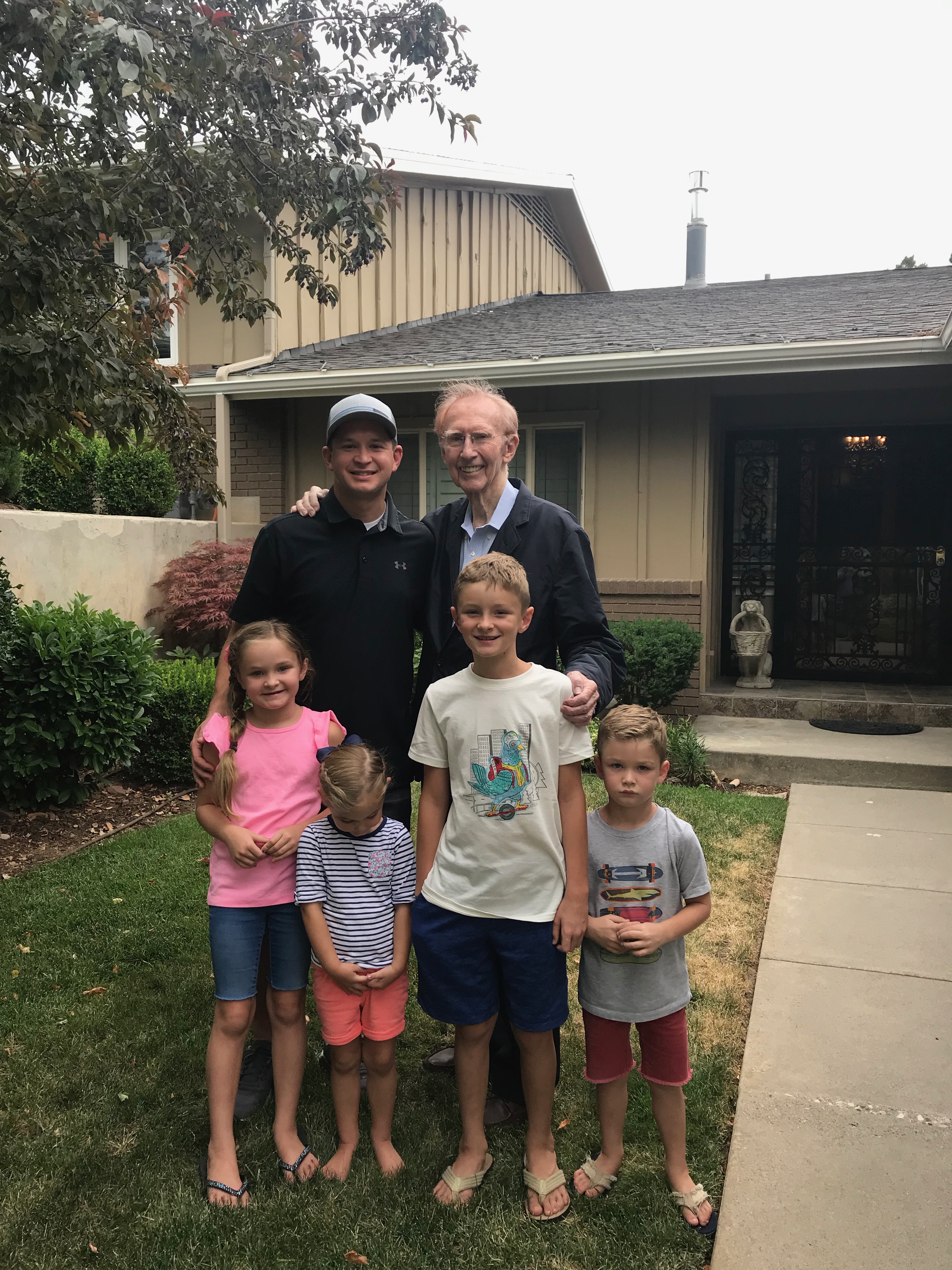
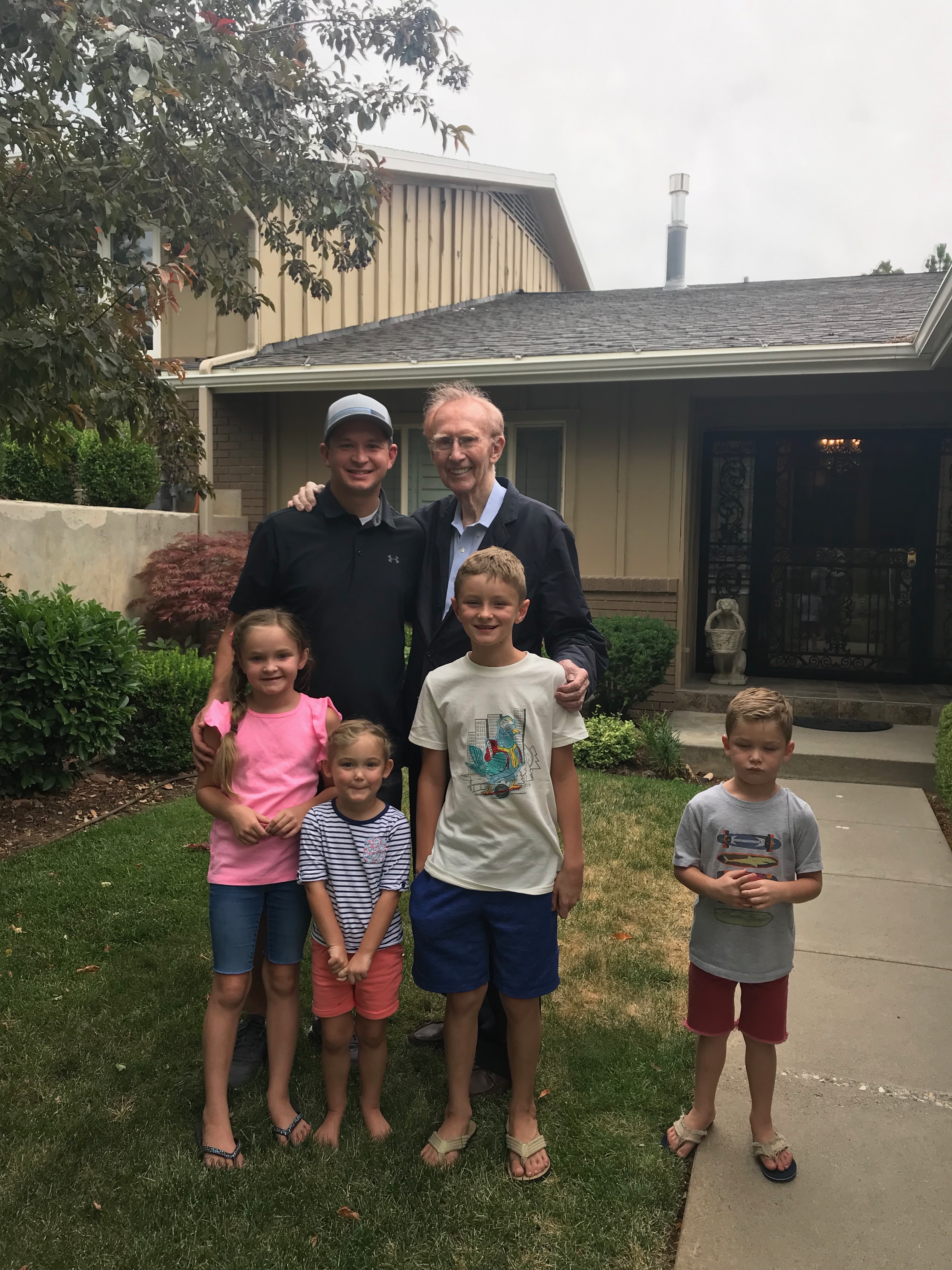

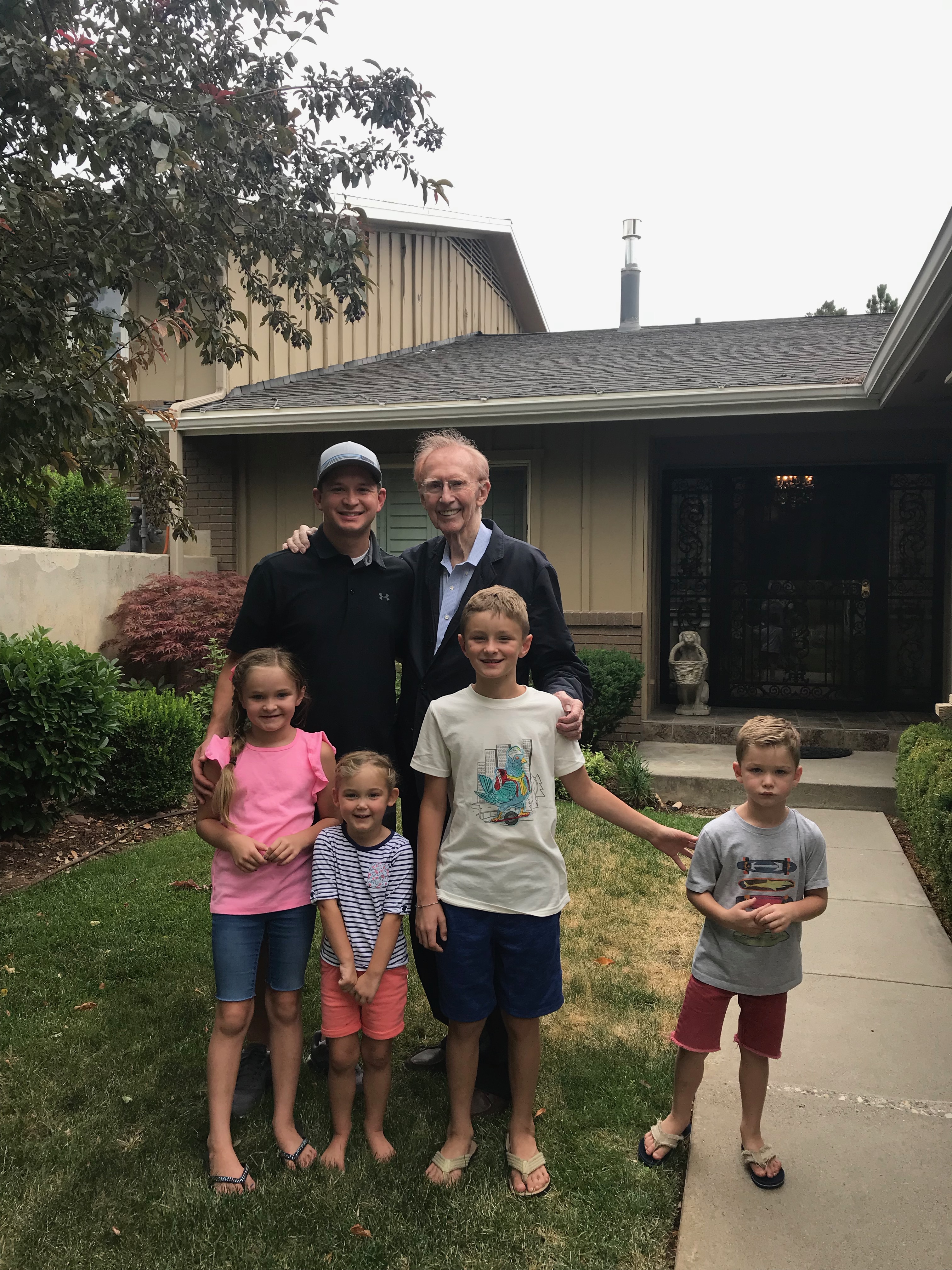


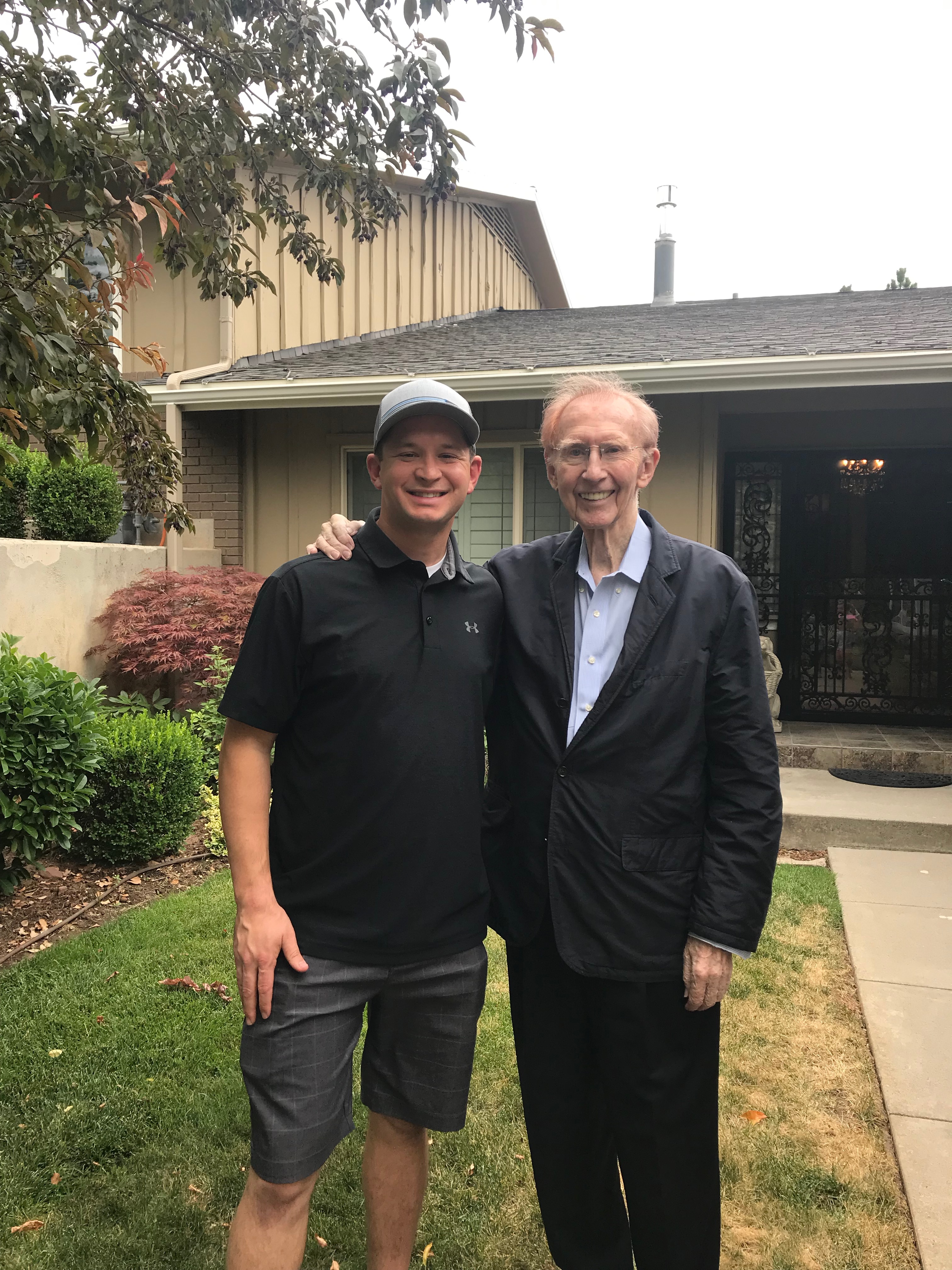


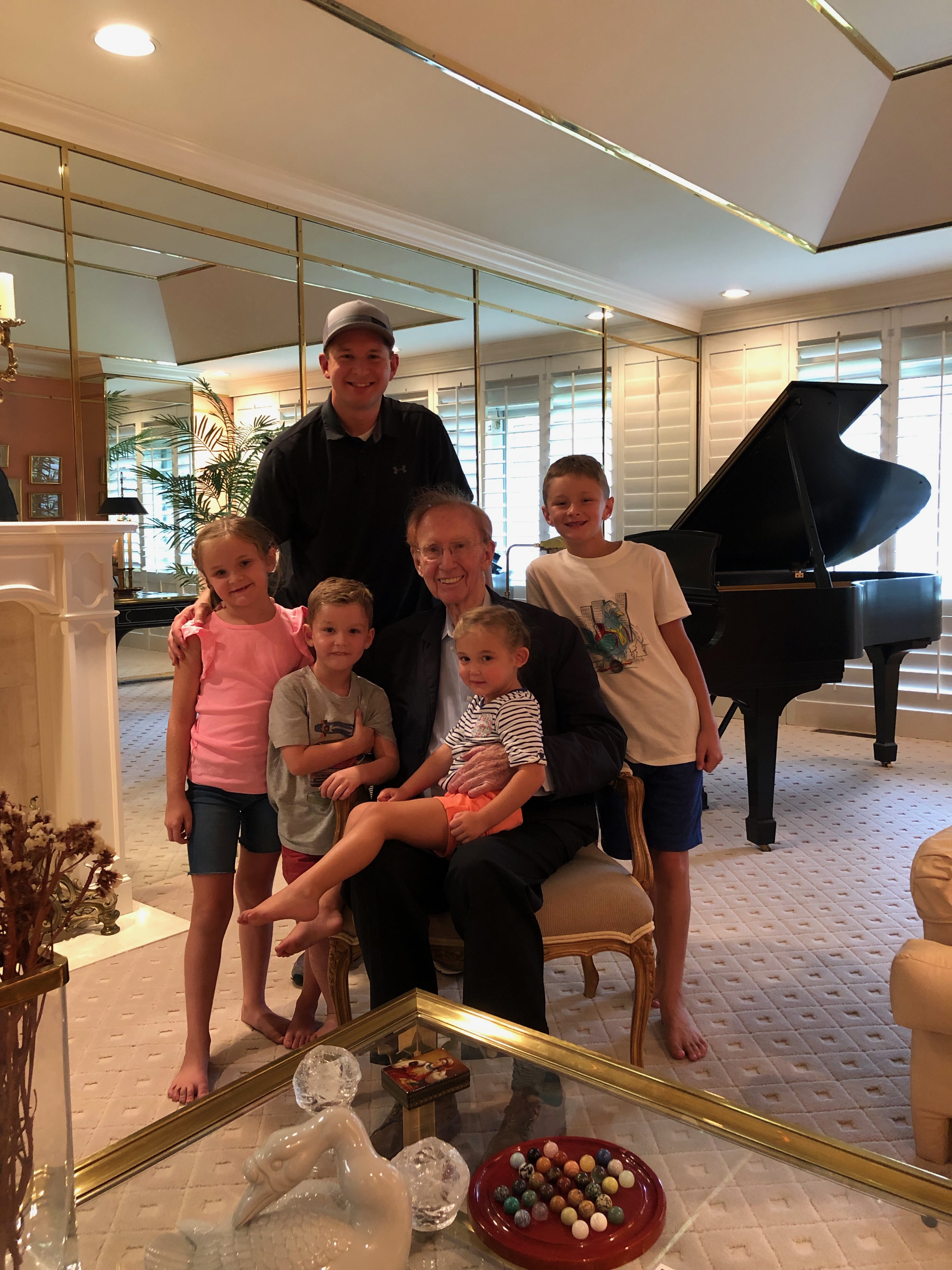

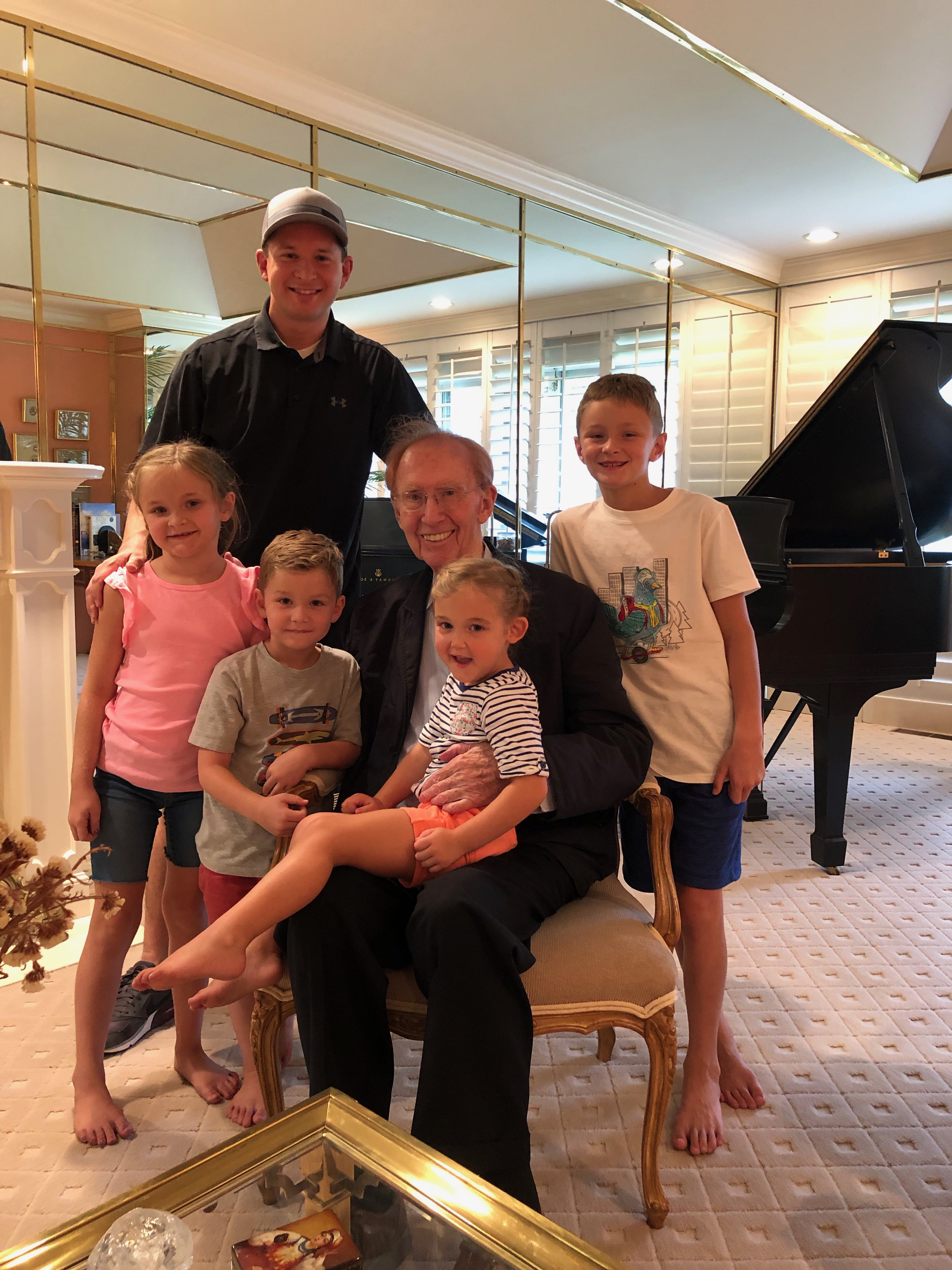


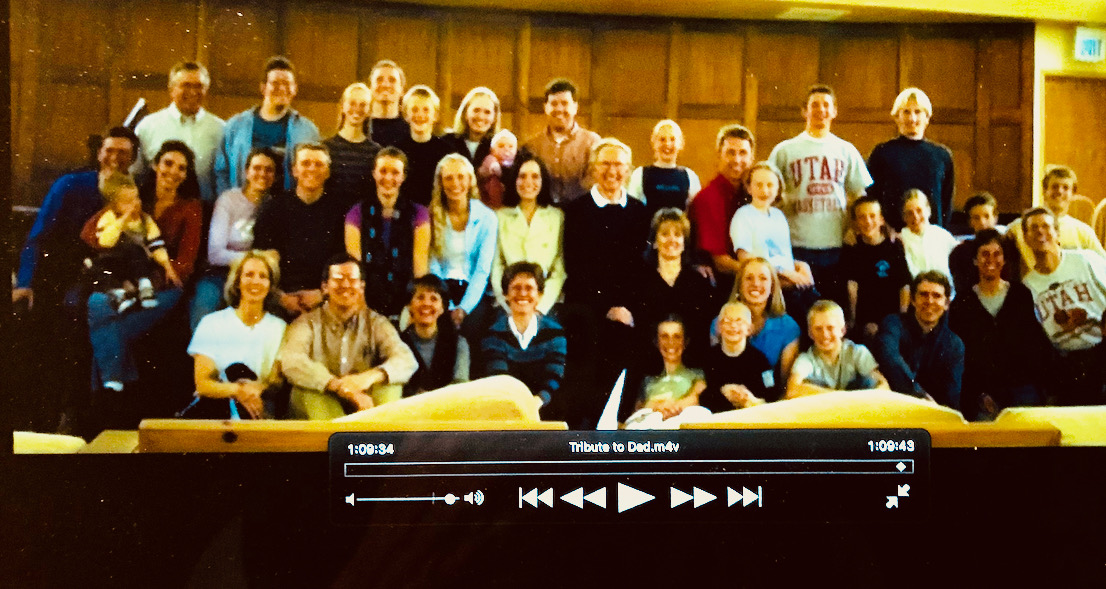
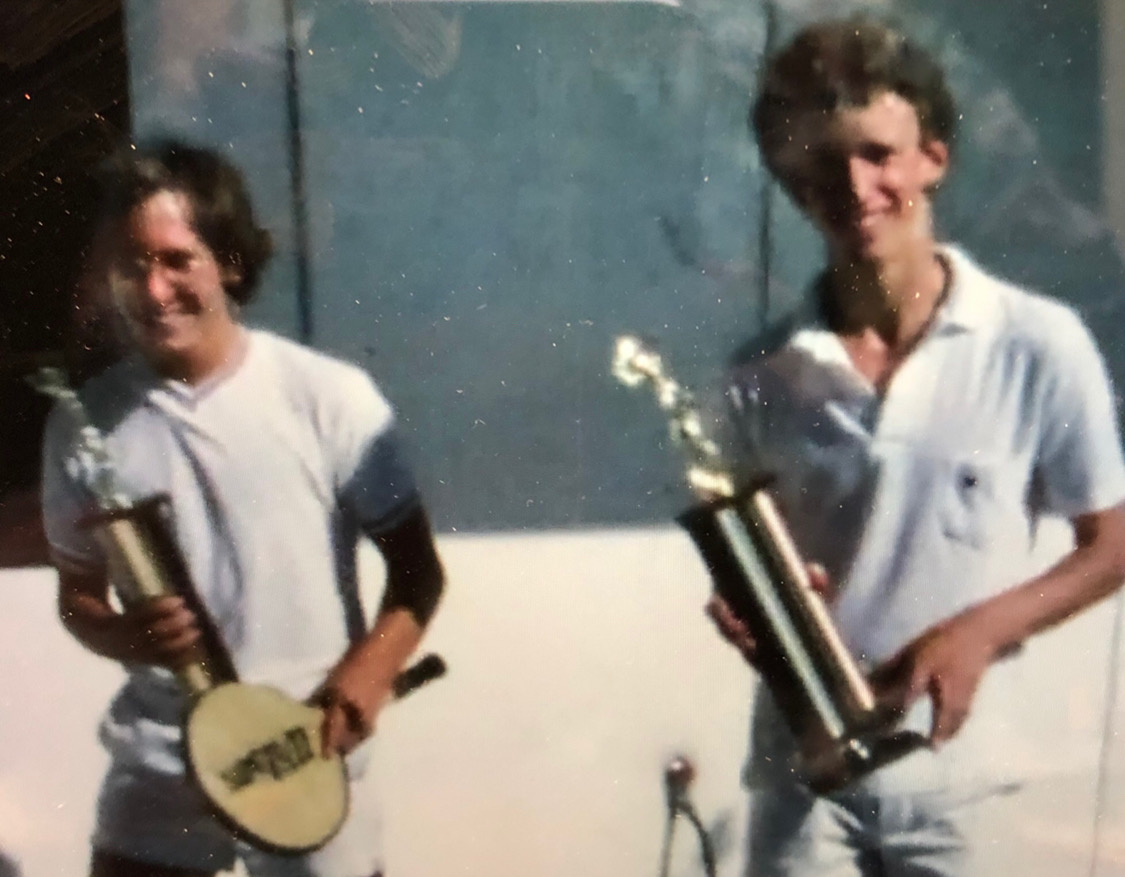
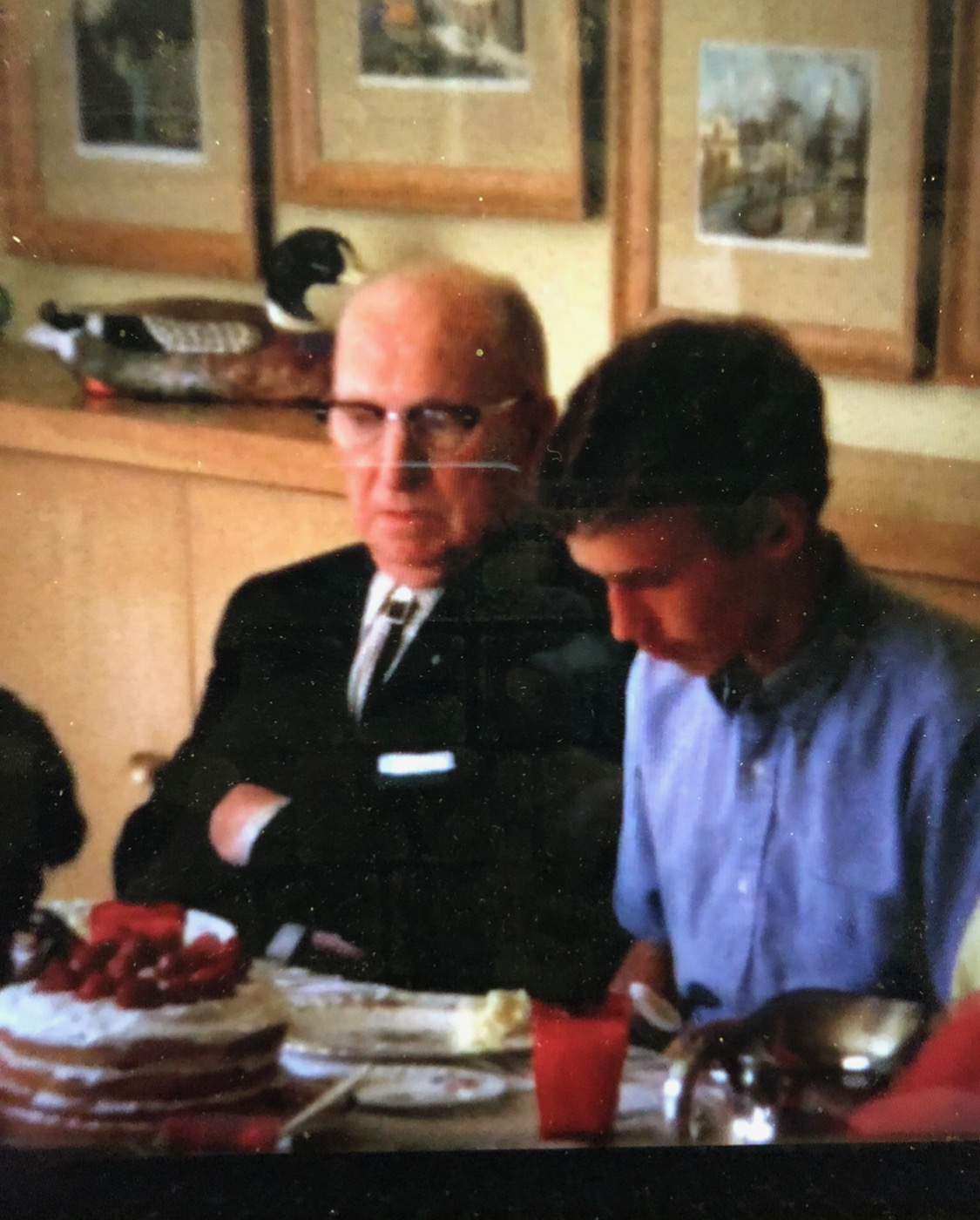
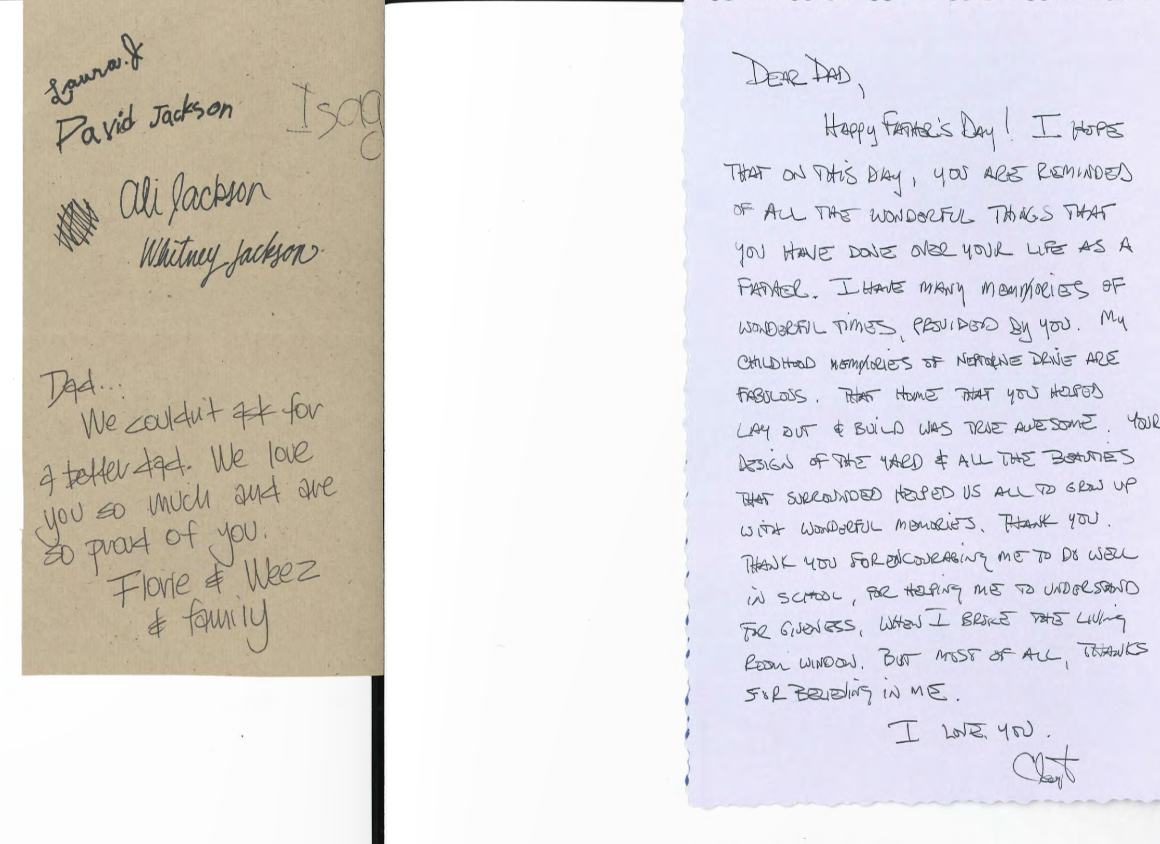
Letters and Memorable Documents:

Clayt born 6-26-54
Word Events in 1954
Besides Clayt’s birth, here’s what what happening in the world in 1954:
January
- January 1 – The Soviet Union ceases to demand war reparations from West Germany.
- January 7 – Georgetown-IBM experiment: The first public demonstration of a machine translation system is held in New York, at the head office of IBM.
- January 10 – BOAC Flight 781, a de Havilland Comet jet plane, disintegrates in mid-air due to metal fatigue, and crashes in the Mediterranean near Elba; all 35 people on board are killed.
- January 12 – Avalanches in Austria kill more than 200.
- January 14 – Marilyn Monroe marries baseball player Joe DiMaggio, at San Francisco City Hall.
- January 14 – The Hudson Motor Car Company merges with Nash-Kelvinator Corporation, forming the American Motors Corporation.
- January 15 – Mau Mau leader Waruhiu Itote is captured in Kenya.
- January 17 – In Yugoslavia, Milovan Đilas, one of the leading members of the League of Communists of Yugoslavia, is relieved of his duties.
- January 20 – The US-based National Negro Network is established, with 46 member radio stations.
- January 21 – The first nuclear-powered submarine, the USS Nautilus, is launched in Groton, Connecticut, by First Lady of the United States Mamie Eisenhower.
- January 25 – The foreign ministers of the United States, Britain, France and the Soviet Union meet at the Berlin Conference.

January 14: Marilyn weds DiMaggio.
February
- February 3 – Elizabeth II becomes the first reigning monarch to visit Australia.
- February 10 – After authorizing $385 million over the $400 million already budgeted for military aid to Vietnam, President of the United States Dwight D. Eisenhower warns against his country’s intervention in Vietnam.
- February 19 – 1954 transfer of Crimea: The Soviet Politburo of the Soviet Union orders the transfer the Crimean Oblast, from the Russian SFSR to the Ukrainian SSR.
- February 23 – The first mass vaccination of children against polio begins in Pittsburgh, United States.
- February 23 – The Patent for the original Oscar Mayer hotdog car (AKA Wienermobile) is published.
- February 25 – Lt. Col. Gamal Abdel Nasser becomes premier of Egypt.
March
- March 1
- U.S. officials announce that a hydrogen bomb test (Castle Bravo) has been conducted, on Bikini Atoll in the Pacific Ocean.
- U.S. Capitol shooting incident: Four Puerto Rican nationalists open fire in the United States House of Representatives chamber and wound 5; they are apprehended by security guards.
- March 9 – American journalists Edward R. Murrow and Fred W. Friendly produce a 30-minute See It Now documentary, entitled A Report on Senator Joseph McCarthy.
- March 12 – Finland and Germany officially end their state of war.
- March 13 – French troops begin the battle against the Viet Minh, in Dien Bien Phu.
- March 19 – Joey Giardello knocks out Willie Tory at Madison Square Garden, in the first televised boxing prize fight to be shown in colour.
- March 23 – In Vietnam, the Viet Minh capture the main airstrip of Dien Bien Phu. The remaining French Army units there are partially isolated.
- March 25
- The 26th Academy Awards Ceremony is held.
- The Soviet Union recognises the sovereignty of East Germany. Soviet troops remain in the country.
- March 27 – The Castle Romeo nuclear test explosion is executed at Bikini Atoll, in the Marshall Islands.
- March 28
- Puerto Rico’s first television station, WKAQ-TV, commences broadcasting.
- The trial of A. L. Zissu and 12 other Zionist leaders ends with harsh sentences, in Communist Romania.
- March 29 – A C-47 transport with French nurse Geneviève de Galard on board is wrecked on the runway, at Dien Bien Phu.
- March 30 – The first operational subway line in Canada opens in Toronto.
April
- April – Bill Haley & His Comets record “Rock Around the Clock“, thus starting the rock and roll craze.
- April 1
- The U.S. Congress and President Dwight D. Eisenhower authorize the founding of the United States Air Force Academy in Colorado.
- South Point School (India) is founded, and becomes the largest school in the world by 1992.
- April 3 – Vladimir Petrov defects from the Soviet Union, and asks for political asylum in Australia.
- April 4 – Legendary symphony conductor Arturo Toscanini experiences a lapse of memory during a concert. At this concert’s end, his retirement is announced, and Toscanini never conducts in public again.
- April 7 – Dwight D. Eisenhower gives his “Domino Theory” speech, during a news conference.
- April 8 – A Royal Canadian Air Force Canadair Harvard collides with a Trans-Canada Air Lines Canadair North Star over Moose Jaw, Saskatchewan, killing 37 people.
- April 11
- This day is denoted as the most boring day in the 20th century by True Knowledge, an answer engine developed by William Tunstall-Pedoe. No significant newsworthy events, births, or deaths are known to have happened on this day.[1]
- In a general election in Belgium, the dominant Christian Social Party wins 95 of the 212 seats in the Chamber of Representatives, and 49 of the 106 seats in the Senate. The government led by Jean Van Houtte loses their majority in parliament. The two other main parties, the Socialist and Liberal Party, subsequently form a rare “purple” government, with Achille Van Acker as Prime Minister.
- April 14
- Aneurin Bevan resigns from the British Labour Party‘s “Shadow Cabinet“.
- A Soviet spy ring in Australia is unveiled.
- April 16 – Vice President Richard Nixon announces that the United States may be “putting our own boys in Indochina regardless of Allied support”.[2]
- April 22 – Senator Joseph McCarthy begins hearings, investigating the United States Army for being “soft” on Communism.
- April 26
- An international conference on Korea and Indo-China opens in Geneva.
- Akira Kurosawa‘s Seven Samurai is released in Japan.
- April 28 – U.S. Secretary of State John Foster Dulles accuses Communist China of sending combat troops to Indo-China, to train the Viet Minh guerrillas.[citation needed]
May
- May 1 – The Unification Church is founded in South Korea.
- May 4 – General Alfredo Stroessner deposes Federico Chávez in a coup d’état in Paraguay; from August 15 he will hold the office of President until 1989.
- May 6 – Roger Bannister runs the first sub-four minute mile, in Oxford, England.
- May 7 – Vietnam War (run-up): The Battle of Dien Bien Phu ends in a French defeat (the battle began on March 13).
- May 8 – The Asian Football Confederation (AFC) is formed in Manila, Philippines.
- May 11 – U.S. Secretary of State John Foster Dulles declares that Indochina is important but not essential to the security of Southeast Asia, thus ending any prospect of American intervention on the side of France.
- May 14
- The Boeing 707 is released, after about 2 years of development.
- The Hague Convention for the Protection of Cultural Property in the Event of Armed Conflict was adopted in The Hague, Netherlands.
- May 15 – The Latin Union (Unión Latina) is created by the Convention of Madrid. Its member countries use the five Romance languages: Italian, French, Spanish, Portuguese, and Romanian. It will suspend operations in 2012.
- May 17
- Brown v. Board of Education (347 US 483 1954): The U.S. Supreme Court rules unanimously that segregated schools are unconstitutional.
- The Royal Commission on the Petrov Affair in Australia begins its inquiry.
- Adnan Menderes of the Democratic Party forms the new (21st) government of Turkey.
- May 20 – Chiang Kai-shek is re-elected as the president of the Republic of China, by the National Assembly.
- May 22 – The common Nordic Labour Market act is signed.
- May 26 – A fire on board the U.S. Navy aircraft carrier USS Bennington, off Narragansett Bay, Massachusetts, kills 103 sailors.
- May 29
- 1954 Australian federal election: Robert Menzies‘ Liberal/Country Coalition Government is re-elected with a decreased majority, defeating the Labor Party led by H.V. Evatt. The election came shortly after the Petrov Affair, which arguably helped the Government survived what was initially predicted to be a defeat.
- Creation and first meeting of the Bilderberg Group.
- Diane Leather becomes the first woman to run a sub-five minute mile, in Birmingham, England.[3]
June
- June 6 – The grand opening of the sculpture of Yuriy Dolgorukiy takes place in Moscow (this statue is one of the main monuments of Moscow).
- June 7 – Early computer scientist Alan Turing commits suicide.
- June 9 – McCarthyism: Joseph Welch, special counsel for the United States Army, lashes out at Senator Joseph McCarthy, during hearings on whether Communism has infiltrated the Army, saying, “Have you, at long last, no decency?”[4]
- June 14 – The words “under God” are added to the United States Pledge of Allegiance.
- June 15 – The UEFA (Union of European Football Associations) is formed in Basel, Switzerland.
- June 17 – A CIA-engineered military coup occurs in Guatemala.
- June 18 – Pierre Mendès France becomes prime minister of France.
- June 22
- Sarah Mae Flemming is expelled from a bus in South Carolina, for sitting in a white-only section.
- Parker–Hulme murder case: Pauline Parker, 16 and her friend Juliet Hulme, 15, bludgeon Parker’s mother to death using a brick, at Victoria Park in New Zealand.
- June 27
- Guatemalan President Jacobo Árbenz steps down in a CIA-sponsored military coup, triggering a bloody civil war that continues for more than 35 years.
- The world’s first atomic power station opens at Obninsk, near Moscow.
July
- July 1
- The Common Nordic Labor Market Act comes into effect.
- The United States officially begins using the international unit of the nautical mile, equal to 6,076.11549 ft. or 1,852 meters.
- July 4
- Food rationing in Great Britain ends, with the lifting of restrictions on sale and purchase of meat, 14 years after it began early in World War II, and nearly a decade after the war’s end.
- “Miracle of Bern”: West Germany beats Hungary 3–2 to win the 1954 FIFA World Cup.
- July 10 – Peter Thomson becomes the first Australian to win the British Open Golf Championship.
- July 15
- The Boeing 367-80 (or Dash 80), prototype of the Boeing 707 series, makes its maiden flight.
- Juan Fangio, Argentine driver for German Grand Prix team Mercedes-Benz, makes a new fastest lap of the Silverstone Circuit, with an average speed of 100.35 mph, the previous record being 100.16 mph.
- July 19 – Release of Elvis Presley‘s first single, “That’s All Right“, by Sun Records (recorded July 5 in Memphis, Tennessee).
- July 21 – First Indochina War: The Geneva Conference sends French forces to the south, and Vietnamese forces to the north, of a ceasefire line, and calls for elections to decide the government for all of Vietnam by July 1956. Failure to abide by the terms of the agreement leads to the establishment of the de facto regimes of North Vietnam and South Vietnam, and the Vietnam War.
- July 31 – 1954 Italian expedition to K2: Italian mountaineers Lino Lacedelli and Achille Compagnoni become the first to reach the summit of the second highest mountain in the world.
August
- August 1 – The First Indochina War ends with the Vietnam People’s Army in North Vietnam, the Vietnamese National Army in South Vietnam, the Kingdom of Cambodia in Cambodia, and the Kingdom of Laos in Laos, emerging victorious against the French Army.
- August 6 – Emilie Dionne, one of the Dionne quintuplets, dies of asphyxiation following an epileptic seizure. She is the first of the five to perish, and three of them live into the 21st century.
- August 16 – The first issue of Sports Illustrated magazine is published in the United States.
- August 23 – A United States Air Force Lockheed C-130 Hercules makes its first flight at Burbank, California, manufactured by Lockheed Martin.
- August 24 – Brazilian president Getúlio Vargas commits suicide, after being accused of involvement in a conspiracy to murder his chief political opponent, Carlos Lacerda.
September
- September 3 – The last ‘new’ episode of The Lone Ranger radio program is broadcast, after 2,956 episodes over a period of 21 years (reruns of old episodes continue to be transmitted).
- September 6 – The SEATO treaty is signed in Manila, Philippines.
- September 8 – The Southeast Asia Treaty Organization (SEATO) is established in Bangkok, Thailand.
- September 9 – A 6.7 Mw Chlef earthquake shakes northern Algeria, with a maximum Mercalli intensity of XI (Extreme). The shock destroyS Orléansville, leaving 1,243–1,409 dead, and 5,000 injured.
- September 11 – The Miss America Pageant is broadcast on television for the first time.
- September 14
- The Soviet Union carries out the Totskoye nuclear exercise.
- English composer Benjamin Britten’s chamber opera version of The Turn of the Screw receives its world premiere, at the Teatro La Fenice in Venice, Italy.
- September 15 – Black Wednesday in air travel: severe delays to flights, due to bad weather, occur along the East Coast of the United States.
- September 17 – William Golding‘s novel Lord of the Flies is published in London.
- September 25 – Footscray Football Club wins their first Australian Football League Grand Final.
- September 26 – Japanese ferry Tōya Maru sinks during a typhoon in the Tsugaru Strait. More than 1,100 people are killed, 7 other ships are wrecked, and at least nine others seriously damaged.
- September 30 – The USS Nautilus (SSN-571), the first nuclear-powered submarine in the world, is commissioned into the U.S. Navy.
October
- October 11
- Pre-Vietnam War: The Viet Minh takes control of North Vietnam.
- Hurricane Hazel crosses over Haiti, killing 1,000.
- October 15 – Hurricane Hazel makes U.S. landfall; it is the only recorded Category 4 hurricane to strike as far north as North Carolina
- October 18
- Texas Instruments announces the development of the first commercial transistor radio. The Regency TR-1 goes on sale the following month.
- The comic strip Hi and Lois, by Mort Walker and Dik Browne, is launched.
- October 20 – A dock workers‘ strike expands in England.
- October 23
- West Germany joins NATO.
- Paris Agreement sets up the Western European Union to implement the Treaty of Brussels (1948), providing for mutual self-defence and other collaboration between Belgium, France, West Germany, Italy, Luxembourg, the Netherlands and the United Kingdom.
- October 25 – Landslides caused by heavy rains hit Salerno, Italy, killing about 300.
- October 26 – Muslim Brotherhood member Mahmoud Abdul Latif tries to kill Gamal Abdel Nasser.
- October 31 – Algerian War of Independence: The Algerian National Liberation Front begins a revolt against French rule.
November
- November 1 – The FLN attacks representative and public buildings of the French colonial power.
- November 2
- The dock workers’ strike in the UK comes to an end.
- The radio program Hancock’s Half Hour, a pioneer in situation comedy, is first broadcast on BBC Radio (a television version will follow in 1956.
- November 3 – The first Godzilla film premieres in Tokyo.
- November 5 – Japan and Burma sign a peace treaty in Rangoon, to end their long-extinct state of war.
- November 10 – U.S. President Dwight D. Eisenhower dedicates the USMC War Memorial (Iwo Jima Memorial), at the Arlington National Cemetery.
- November 12 – The main immigration port-of-entry in New York Harbor at Ellis Island closes permanently.
- November 13 – Great Britain defeats France, to capture the first ever Rugby League World Cup in Paris in front of around 30,000 spectators
- November 14 – Egyptian president Muhammad Naguib is deposed, and Gamal Abdel Nasser replaces him.
- November 22 – Berman v. Parker (348 U.S. 26): The U.S. Supreme Court upholds the federal slum clearance and urban renewal programs.
- November 23 – The Dow Jones Industrial Average rises 3.27 points, or 0.86 percent, closing at an all-time high of 382.74. More significantly, this is the first time the Dow has surpassed its peak level, reached just before the Wall Street Crash of 1929.
- November 30 – In Sylacauga, Alabama, a four-kilogram piece of the Hodges Meteorite crashes through the roof of a house and badly bruises a napping woman, in the first documented case of an object from outer space hitting a person.
December
- December 1 – The first Hyatt Hotel, The Hyatt House Los Angeles, opens on the grounds of Los Angeles International Airport. It is the first hotel in the world built on an airport property.
- December 2
- Red Scare: The United States Senate votes 67–22 to condemn Joseph McCarthy, for “conduct that tends to bring the Senate into dishonor and disrepute.”
- The Taiwan-United States Mutual Defense Treaty is signed.[5]
- December 4 – The first Burger King opens in Miami, Florida.
- December 15 – The Netherlands Antilles is created out of the Dutch Caribbean nations. It is later dissolved between 1986 and 2010.
- December 23 – J. Hartwell Harrison and Joseph Murray perform the world’s first successful kidney transplant, in Boston, Massachusetts.
- December 24 – Laos gains full independence from France.
Date titles
- New Zealand engineer Sir William Hamilton develops the first pump-jet engine (the “Hamilton Jet”) capable of propelling a jetboat.[6]
- The first electric drip brew coffeemaker is patented in Germany and named the Wigomat after its inventor Gottlob Widmann.[7]
- The Boy Scouts of America desegregates on the basis of race.
- Gerbils (Meriones unguiculatus) are brought to the United States by Dr. Victor Schwentker.
- The case of Lothar Malskat, who had admitted that he had painted the supposedly antique frescoes in Marienkirche himself, goes to trial.
- The TV dinner is introduced, by American entrepreneur Gerry Thomas.
- New York City Ballet founding balletmaster George Balanchine‘s production of The Nutcracker is staged for the first time in New York City, and it became a tradition there, still being performed annually as of 2010.
- South Korea opens the Gimpo International Airport.
- In South Vietnam, the Viet Minh is reorganised into the Viet Cong.
- After the death of Joseph Stalin, the Soviet Union starts releasing political prisoners and deportees from its Gulag prison camps.
Events in only the USA in 1954
Federal Government
- President: Dwight D. Eisenhower (R–Kansas/New York)
- Vice President: Richard Nixon (R–California)
- Chief Justice: Earl Warren (California)
- Speaker of the House of Representatives: Joseph William Martin, Jr. (R–Massachusetts)
- Senate Majority Leader: William F. Knowland (R–California)
- Congress: 83rd
Events
January

January 21: USS Nautilus, the first nuclear-powered submarine
- January 14 – Marilyn Monroe marries baseball player Joe DiMaggio at San Francisco City Hall.
- January 20
- The U.S.-based National Negro Network is established with 40 charter member radio stations.
- Rogers Pass, Montana, records the coldest temperature in the contiguous United States of −70 °F (−56.7 °C).
- January 21 – The first nuclear-powered submarine, the USS Nautilus, is launched in Groton, Connecticut, by First Lady of the United States Mamie Eisenhower.
- January 25 – The foreign ministers of the United States, Britain, France and the Soviet Union meet at the Berlin Conference.
February
- February 10 – After authorizing $385,000,000 over the $400,000,000 already budgeted for military aid to Vietnam, U.S. President Dwight Eisenhower warns against United States intervention in Vietnam.
- February 23 – The first mass vaccination of children against polio begins in Pittsburgh, Pennsylvania, United States.
March
- March 1 – U.S. officials announce that a hydrogen bomb test has been conducted on Bikini Atoll in the Pacific Ocean.
- March 1 – U.S. Capitol shooting incident: Four Puerto Rican nationalists open fire in the United States House of Representatives chamber and wound five people; they are apprehended by security guards.
- March 9 – American journalists Edward Murrow and Fred W. Friendly produce a 30-minute See It Now documentary, entitled A Report on Senator Joseph McCarthy.
- March 16 – The Army–McCarthy hearings are convened.
- March 19 – Joey Giardello knocks out Willie Tory at Madison Square Garden, in the first televised boxing prizefight to be shown in color.
- March 25 – The 26th Academy Awards ceremony is held.
- March 28 – Puerto Rico’s first television station, WKAQ-TV, goes on the air.
April
- April 1 – President Dwight D. Eisenhower authorizes the creation of the United States Air Force Academy in Colorado
- April 7 – Dwight D. Eisenhower gives his “domino theory” speech during a news conference.
- April 16 – Vice President Richard Nixon announces that the United States may be “putting our own boys in Indochina regardless of Allied support.”
- April 22 – Senator Joseph McCarthy begins hearings investigating the United States Army for being “soft” on Communism.
May
- May 14 – The Boeing 707 is released after about two years of development.
- May 17 – Brown v. Board of Education (347 US 483 1954): The United States Supreme Court rules that segregated schools are unconstitutional.[1]
June
- June 9 – McCarthyism: Joseph Welch, special counsel for the United States Army, lashes out at Senator Joseph McCarthy, during hearings on whether Communism has infiltrated the Army, saying, ‘Have you, at long last, no decency?’.[1]
- June 14 – The words “under God” are added to the United States Pledge of Allegiance.
- June 17 – A CIA-engineered military coup occurs in Guatemala.
- June 27 – Guatemalan President Jacobo Arbenz Guzmán steps down in a CIA-sponsored military coup, triggering a bloody civil war that continues for more than thirty-five years.
July
- July 1 – The United States officially begins using the international unit of the nautical mile, equal to 6,076.11549 ft. or 1,852 meters.
- July 15 – The maiden flight of the Boeing 367-80 (or Dash 80), a prototype of the Boeing 707 series.
- July 19 – Release of Elvis Presley‘s first single, “That’s All Right“, by Sun Records (recorded July 5 in Memphis, Tennessee).
August
- August 16 – The first issue of Sports Illustrated magazine is published in the United States.
September
- September 3 – The last new episode of The Lone Ranger is aired on radio, after 2,956 episodes over a period of twenty-one years.
- September 11 – The Miss America Pageant is broadcast on television for the first time.
- September 29 – The Catch (baseball): A notable defensive play is made by New York Giants center fielder Willie Mays on a ball hit by Cleveland Indians batter Vic Wertz during Game 1 of the 1954 World Series at the Polo Grounds in Upper Manhattan.
- September 30 – The USS Nautilus, the first nuclear-powered submarine, is commissioned by the US Navy.
October
- October 15 – Hurricane Hazel makes U.S. landfall; it is the only recorded Category 4 hurricane to strike as far north as North Carolina.
- October 18 – Texas Instruments announces the development of the first transistor radio.
November
- November 10 – U.S. President Dwight D. Eisenhower dedicates the USMC War Memorial (Iwo Jima memorial) in Arlington National Cemetery.
- November 12 – The main immigration port of entry in New York Harbor at Ellis Island closes.
- November 23 – The Dow Jones Industrial Average rises 3.27 points, or 0.86%, closing at an all-time high of 382.74. More significantly, this is the first time the Dow has surpassed its peak level reached just before the Wall Street Crash of 1929.
- November 30 – In Sylacauga, Alabama, a 4 kg piece of the Hodges Meteorite crashes through the roof of a house and badly bruises a napping woman, in the first documented case of an object from outer space hitting a person.
December
- December 1 – The first Hyatt Hotel, The Hyatt House Los Angeles, opens. It is the first hotel in the world built outside of an airport.
- December 2
- Red Scare: The United States Senate votes 67–22 to condemn Joseph McCarthy for “conduct that tends to bring the Senate into dishonor and disrepute.”[1]
- The Sino-American Mutual Defense Treaty between the United States and Republic of China is signed.[2]
- December 4 – The first branch of Burger King opens in Miami, Florida, USA.
- December 21 – The 6.5 ML Eureka earthquake affected the north coast of California with a maximum Mercalli intensity of VII (Very strong). Several people were injured and one was killed, with $2.1 million in damage.
- December 23 – The first successful kidney transplant is performed by Joseph E. Murray, MD in Boston from one identical twin to his brother. Murray would later share the 1990 Nobel Prize in Physiology or Medicine for his “[discovery] concerning organ and cell transplantation in the treatment of human disease”.[3]
Undated
- Gerbils (Meriones unguiculatus) are brought to the United States by Dr. Victor Schwentker.
- New York City Ballet co-founder and balletmaster George Balanchine‘s production of The Nutcracker is staged for the first time in New York, becoming an annual tradition there, still being performed there as of 2008.
- The Boy Scouts of America desegregates on the basis of race. [Source/citation needed — no evidence for this statement found until 1974]
- The TV dinner is introduced by the American entrepreneur Gerry Thomas.
Ongoing
- Cold War (1947–1991)
- Second Red Scare (1947–1957)
–Wikipedia: https://en.wikipedia.org/wiki/1954_in_the_United_States